Most restaurant operators think of used cooking oil as waste — something to get rid of. That framing misses the bigger picture. Your used fryer oil is a feedstock in a sophisticated supply chain that produces transportation fuel, reduces carbon emissions, and underpins a multibillion-dollar renewable energy industry.
Understanding what actually happens to your oil after pickup isn't just interesting — it can inform how you manage your oil quality, choose your provider, and position your operation from a sustainability standpoint. Here's the full story.
The Journey Starts at Your Restaurant
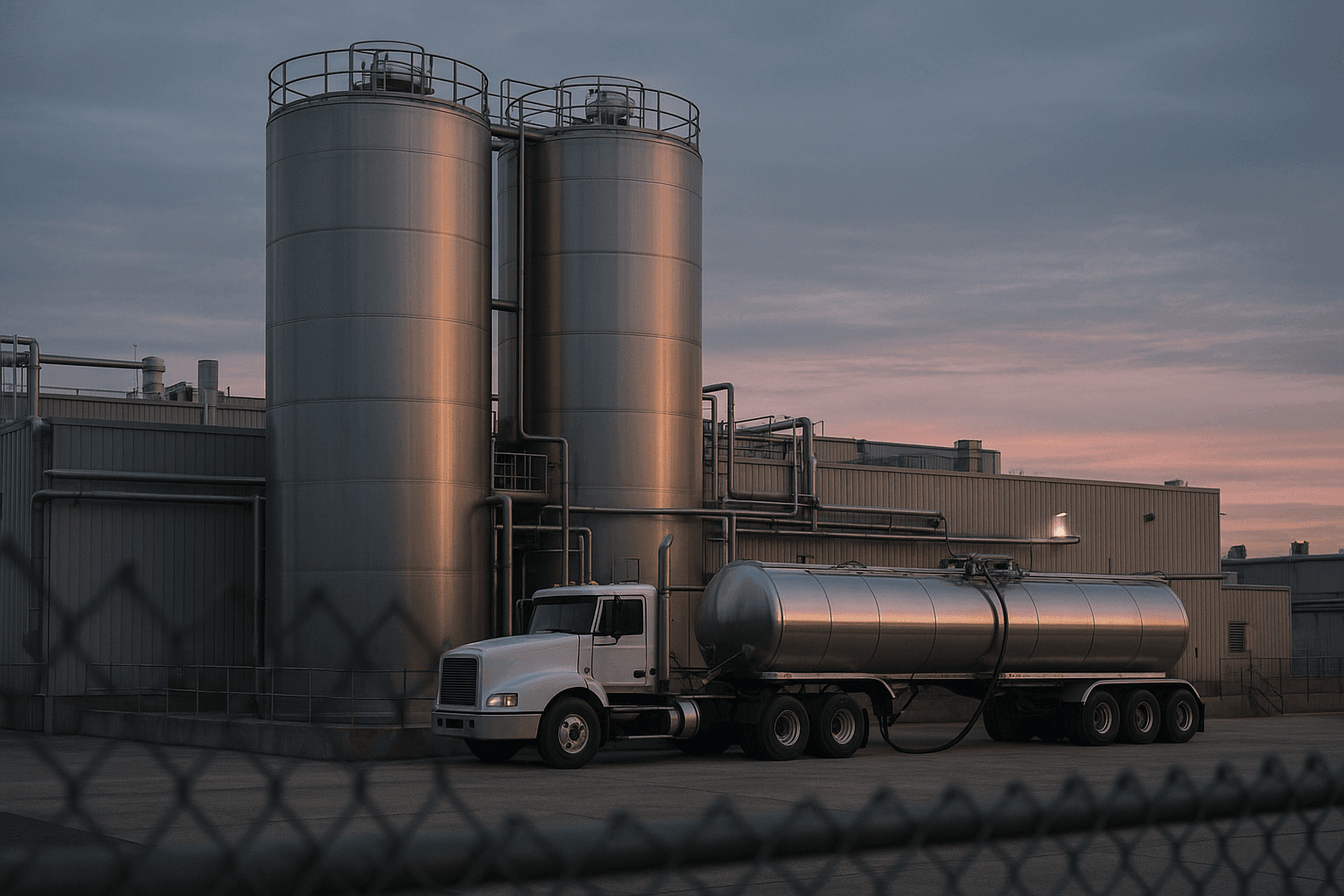
When Kitchen Oil Recycling or another licensed hauler shows up to collect your used cooking oil, the driver pumps your container into a tanker or drums fitted to the service vehicle. The collected oil is weighed or measured by volume, and a manifest is issued. That paperwork creates a chain of custody — a documented record that the oil moved from your kitchen to a licensed processing facility.
This chain of custody matters. California's CDFA regulations require it, but it also ensures the oil ends up where it's supposed to go: a licensed rendering or refining facility, not someone's backyard or an illegal dump site.
Consolidation and Pre-Processing
Collected UCO from multiple restaurant accounts gets consolidated at a receiving facility or depot. Here, the oil undergoes initial processing:
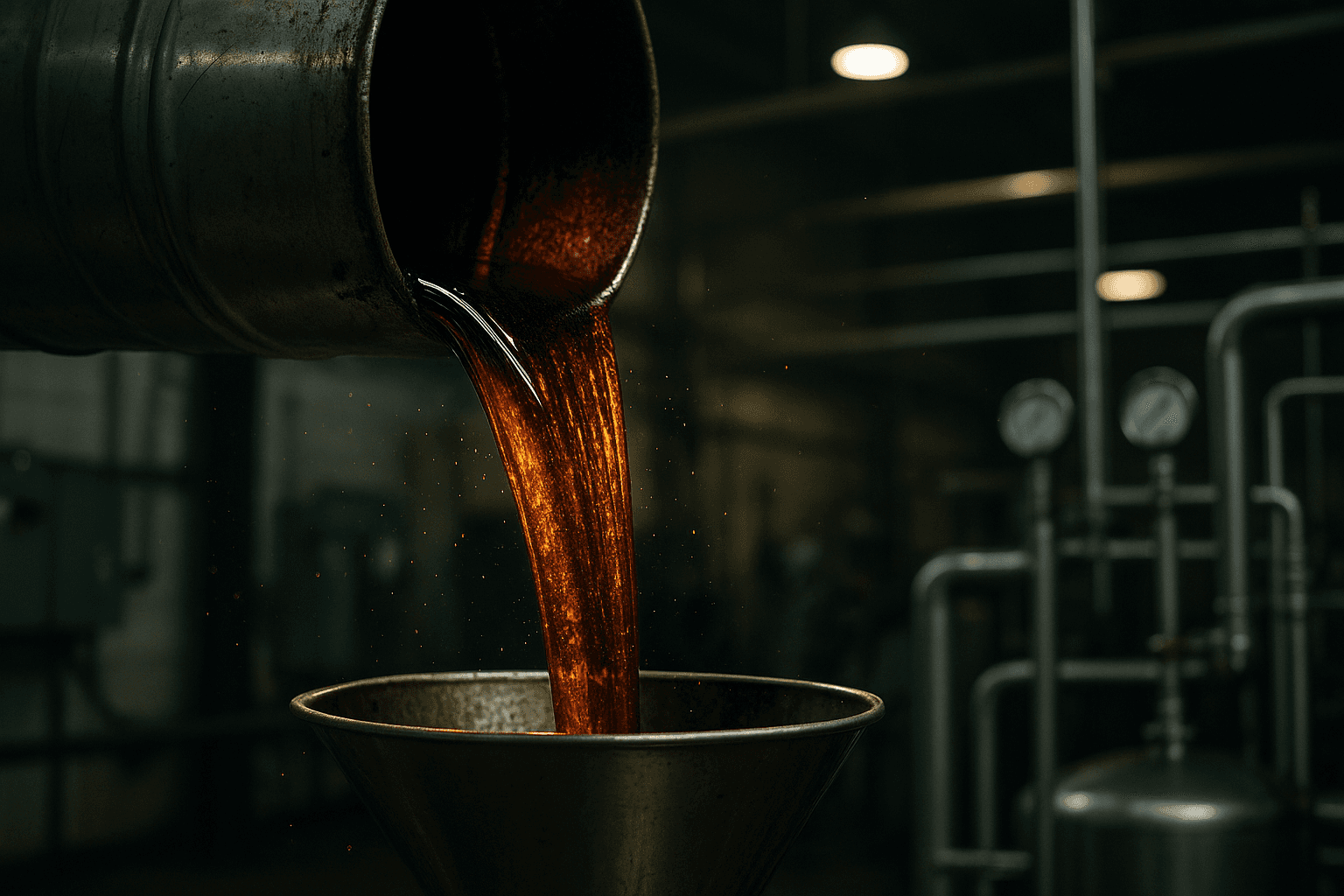
Settling and water removal. Restaurant-sourced oil typically contains some water content. This is removed through heating and settling — water sinks, oil rises. Excess water reduces the energy content of the fuel produced and can cause problems in downstream processing.
Solids removal. Food particles, breading, and other debris that made it into the container are filtered out. Clean oil commands better prices and processes more efficiently.
Quality testing. A good processor tests for free fatty acid (FFA) content, moisture, and contaminants. This is what determines the market grade of the oil — yellow grease versus brown grease versus trap grease — and therefore what it's worth and where it goes next.
The Two Main End Products: Biodiesel and Renewable Diesel
This is where things get interesting. Depending on the processing pathway, your used cooking oil becomes one of two main fuel products — and they're more different than most people realize.
Biodiesel
Biodiesel is produced through a chemical process called transesterification. In this process, the triglycerides in vegetable or animal fats react with an alcohol (typically methanol) in the presence of a catalyst to produce fatty acid methyl esters (FAME) — that's the biodiesel — and glycerol as a byproduct.
Biodiesel can be blended with petroleum diesel or used in pure form (B100). It's used in trucks, buses, heating systems, and agricultural equipment. It works in existing diesel engines without modification when blended at standard ratios.
Glycerol, the byproduct, isn't wasted either. It goes into soaps, cosmetics, pharmaceuticals, and food-grade glycerin products.
Renewable Diesel (R99 / HVO)
Renewable diesel — sometimes called R99 or hydrotreated vegetable oil (HVO) — is produced through a different process called hydroprocessing. Here, the fats and oils are treated with hydrogen at high temperature and pressure, removing oxygen and converting the feedstock into hydrocarbon chains that are chemically identical to petroleum diesel.
The key difference from biodiesel: renewable diesel is a drop-in fuel. It behaves exactly like petroleum diesel in terms of cold weather performance, energy density, and compatibility with diesel engines. It doesn't require engine modification and can be used at any blend ratio, including 100%.
Renewable diesel has seen enormous growth in California, driven partly by the state's Low Carbon Fuel Standard (LCFS), which creates financial incentives proportional to a fuel's carbon reduction versus petroleum. UCO-derived renewable diesel scores extremely well on this metric, making California one of the highest-value markets in the world for used cooking oil feedstock.
Sustainable Aviation Fuel (SAF)
An increasingly significant end market is sustainable aviation fuel. Airlines and governments worldwide are under pressure to decarbonize aviation, and UCO-derived SAF is one of the most viable near-term pathways. The same hydroprocessing technology used for renewable diesel can be tuned to produce jet fuel specifications. While SAF is still a small fraction of aviation fuel overall, demand is growing rapidly, and UCO is a preferred feedstock because of its favorable carbon intensity score.
Why Your Oil Quality Matters to the Supply Chain
Now that you understand where the oil goes, it's easier to understand why quality matters.
Refiners pay more for high-quality yellow grease — clean, low-FFA oil with minimal water content. This is the oil that commands the best price on commodity markets and produces the cleanest fuel with the fewest processing steps.
Brown grease — higher FFA, more contaminated — still has value, but it requires more processing and commands a lower price. Grease trap waste (a different product than fryer oil) is the lowest-value material and requires the most intensive processing.
For your restaurant, this means:
- Filter your fryer oil regularly. Filtration extends oil life and keeps FFA content down.
- Keep water out of fryers. Moisture contamination is the primary quality killer for UCO.
- Keep the collection container sealed. Rain, condensation, and kitchen washdown water lower oil quality.
- Don't mix food waste into the container. Solids contaminate the oil and create processing headaches.
Better quality oil means better terms with your hauler and helps ensure you continue to qualify for free pickup service.
California's LCFS and Why It Matters for Restaurant Owners
California's Low Carbon Fuel Standard (LCFS) is a regulatory program that assigns carbon intensity scores to transportation fuels. Fuels with a lower carbon intensity than petroleum receive credits; fuels with a higher carbon intensity incur deficits. Fuel producers buy and sell these credits, and the market price of LCFS credits adds significant economic value to low-carbon fuels.
UCO-derived biodiesel and renewable diesel score very well under the LCFS — often 60–80% lower carbon intensity than petroleum diesel. This means every gallon of fuel produced from your restaurant's oil has real carbon credit value in the California market.
That financial value is part of what flows back through the supply chain to make free UCO pickup economically viable for haulers and restaurants. The LCFS, in a real sense, is what pays for your free collection service.
The Role of Kitchen Oil Recycling in the Supply Chain
Kitchen Oil Recycling sits at the beginning of this supply chain — collecting UCO from restaurants across Orange County, Los Angeles, and San Diego and ensuring it reaches licensed processors where it enters the biodiesel and renewable diesel production pipeline.
We handle the documentation, the logistics, and the compliance so your team doesn't have to. Every collection comes with a CDFA-compliant manifest, and we can provide collection volume data for sustainability reporting if your brand tracks ESG metrics.
For high-volume operations — commissaries, food manufacturers, catering companies — we also handle bulk cooking oil disposal and recycling, including large-capacity container placement and dedicated pickup scheduling.
Reporting the Impact
If your restaurant group has sustainability goals — and increasingly, both customers and landlords expect this — your UCO recycling data is a meaningful part of that story.
A mid-size restaurant generating 50 gallons of used cooking oil per month is contributing hundreds of gallons of renewable diesel feedstock annually. At typical carbon intensity differentials, that translates to a measurable reduction in lifecycle transportation emissions versus petroleum fuel.
Kitchen Oil Recycling can provide per-account collection data that you can fold into a sustainability report or share with a franchisor, landlord, or investor. Ask our team about sustainability reporting when you set up your account.
Your used cooking oil isn't waste. It's a feedstock that fuels trucks, planes, and buses while reducing California's carbon footprint. Choosing a compliant, responsible pickup provider — and maintaining your oil quality — is how you make sure that full chain of value actually works the way it's supposed to.