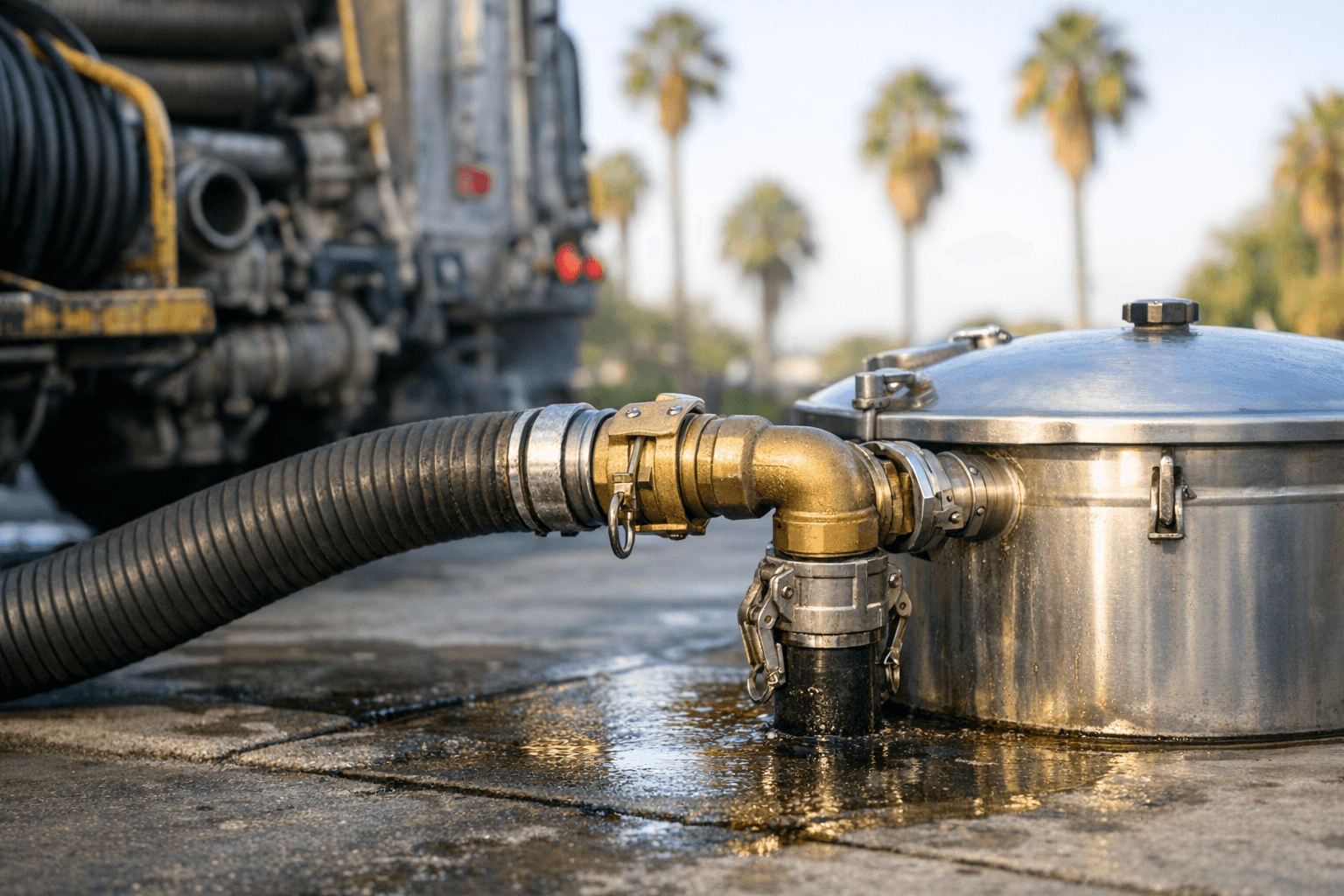
Cooking Oil Disposal That Keeps You on the Right Side of California Law
Licensed, documented, and fully compliant cooking oil removal for restaurants, food processors, and institutional kitchens. Every pickup meets CDFA, EPA, and local pretreatment standards — so you never worry about fines, citations, or environmental violations.
Cooking Oil Disposal That Keeps You on the Right Side of California Law
Licensed, documented, and fully compliant cooking oil removal for restaurants, food processors, and institutional kitchens. Every pickup meets CDFA, EPA, and local pretreatment standards — so you never worry about fines, citations, or environmental violations.
A cooking oil disposal service removes used fryer oil from commercial kitchens through licensed collection, proper transportation, and documented recycling. In California, disposal must comply with CDFA transporter licensing under CCR Title 3 Section 1180, local FOG ordinances, and EPA pretreatment standards. Compliant disposal prevents fines exceeding $25,000 and protects storm drains from contamination.
California Cooking Oil Disposal Regulations Are Strict — and the Penalties Are Real
California imposes some of the strictest cooking oil disposal regulations in the country, and the enforcement mechanisms have teeth. Under Health and Safety Code Section 114197, liquid waste from food facilities — including used cooking oil — must be disposed of through approved methods by licensed transporters. Violators face administrative fines that start at $1,000 per incident and escalate to $25,000 or more for willful or repeated violations. Beyond state law, every county and sanitation district in Southern California operates its own fats, oils, and grease (FOG) program with additional permitting, inspection, and documentation requirements. If your operation falls under the jurisdiction of LA County Sanitation, OC San, or the City of San Diego’s Public Utilities department, you are subject to a layered compliance framework that many operators do not fully understand until an inspector shows up.
The environmental consequences of improper disposal are equally severe. Pouring used cooking oil down a drain — even one connected to a grease interceptor — sends fats, oils, and grease into the municipal sewer system, where they solidify, create blockages, and cause sanitary sewer overflows (SSOs). These overflows contaminate waterways and storm drains, triggering enforcement actions under the Clean Water Act. The California State Water Resources Control Board administers the NPDES permit program, which holds food facilities accountable for discharges that reach waters of the United States. A single SSO traced back to your restaurant can trigger an investigation, mandatory corrective action, and penalties from both the water board and your local sanitation district simultaneously.
Many operators assume their current disposal method is compliant simply because they have always done it that way. But California regulations have tightened significantly over the past decade, and what was acceptable five years ago may now constitute a violation. If your hauler cannot produce a valid CDFA transporter license, if you are not receiving manifests for every pickup, or if you are unsure where your oil ends up after collection, you have a compliance gap that is costing you money or exposing you to enforcement risk — or both. A professional cooking oil disposal service closes those gaps and gives you documented proof of compliance that satisfies every layer of regulatory oversight.
100%
compliant disposal
Zero
fines guaranteed
CDFA
licensed transporter
What California Law Requires for Cooking Oil Disposal
California regulates cooking oil disposal at both the state and local level. At the state level, CCR Title 3 Section 1180.20 requires every person or company that transports inedible kitchen grease to hold a valid CDFA transporter license and generate a manifest for every load. At the local level, FOG programs operated by county sanitation districts impose additional requirements around grease interceptor maintenance, disposal documentation, and inspection access. Our service is built to satisfy every requirement at every level, so your compliance is never in question.
- CDFA-licensed transporter with credentials verified on every route
- Digital manifest generated for every pickup per CCR Title 3 §1180
- Meets LA County FOG, OC San FOG permit, and San Diego FEWD requirements
- Seven-year digital record retention exceeding state minimums
- Inspection-ready compliance documentation available on demand
The Environmental Cost of Improper Cooking Oil Disposal
Used cooking oil that enters the sewer system or storm drains causes damage that extends far beyond your property line. Grease solidifies in sewer pipes, creating blockages that lead to sanitary sewer overflows. These overflows discharge raw sewage and grease into waterways, beaches, and storm drain systems. The California State Water Resources Control Board tracks every reported SSO and can initiate enforcement against contributing dischargers under the NPDES permit program. EPA pretreatment standards add a federal layer of accountability. Proper disposal through a licensed service eliminates your contribution to these problems entirely.
- Prevents sanitary sewer overflows caused by grease blockages
- Eliminates storm drain contamination risk from surface runoff
- Keeps your operation clear of NPDES enforcement actions
- Oil is recycled into biodiesel and animal feed — not dumped
- Documented chain of custody from your kitchen to the recycling facility
Proper Disposal Documentation That Passes Any Inspection
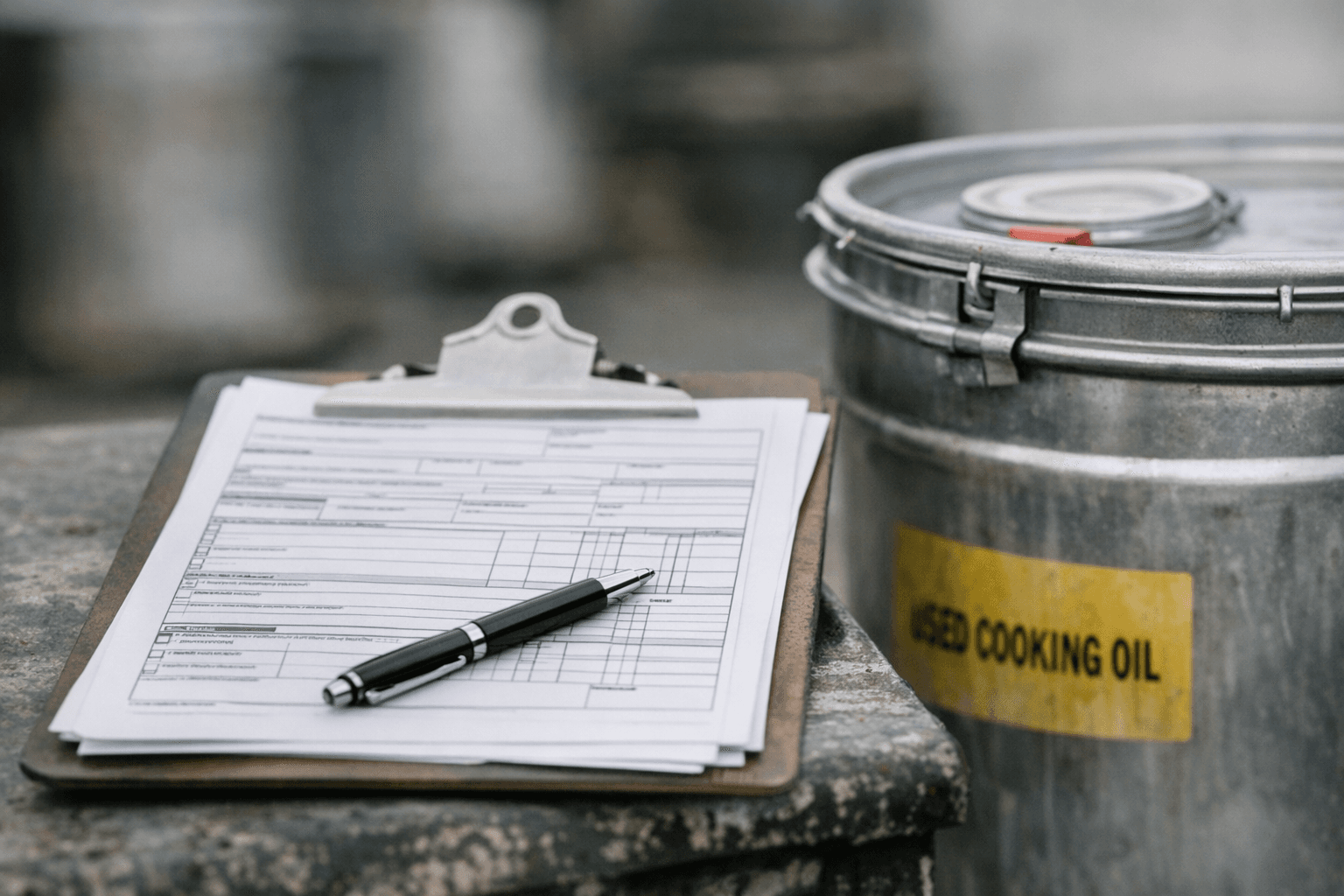
When a health inspector, FOG inspector, or environmental compliance officer asks to see your cooking oil disposal records, you need to produce them on the spot. Paper manifests in a filing cabinet are easy to lose, hard to search, and impossible to share with multiple inspectors simultaneously. Our digital documentation system stores every manifest, pickup record, and compliance certificate in your online dashboard. Filter by date range, download PDFs, or share access with your compliance team — all within seconds of an inspector’s request.
- Every pickup generates a timestamped digital manifest automatically
- Dashboard tracks volume collected, pickup dates, and driver credentials
- Export compliance reports as PDF for health inspections or corporate audits
- Share read-only access with franchise compliance teams or landlords
- Records retained seven years — three years beyond the CDFA minimum

From Your Fryer to the Recycling Facility — Full Chain of Custody
Compliant cooking oil disposal does not end when the truck leaves your parking lot. California regulations require transporters to deliver collected oil to licensed rendering or recycling facilities — not to unlicensed buyers, dump sites, or intermediaries. Our chain of custody is fully documented from the moment oil leaves your container to the moment it arrives at a certified recycling facility where it is processed into biodiesel fuel or animal feed ingredients. You receive documentation confirming final disposition, which closes the loop on your regulatory obligation.
- Oil delivered exclusively to CDFA-licensed rendering and recycling facilities
- Chain of custody documented from pickup to final disposition
- Recycled into biodiesel fuel and animal feed — zero landfill disposal
- Final disposition documentation available upon request
- Complete traceability satisfies both state and federal audit requirements
Who Needs Compliant Cooking Oil Disposal
Restaurants
Independent and chain restaurants of all sizes that need documented, compliant disposal meeting local FOG requirements and state CDFA licensing mandates.
Food Processors
Food manufacturing and processing facilities generating high volumes of waste oil subject to industrial pretreatment standards and EPA discharge limits.
Institutional Kitchens
Correctional facilities, military bases, and government-operated kitchens subject to strict procurement and compliance documentation requirements.
Event Caterers
Catering operations working across multiple venues that need flexible disposal scheduling and portable documentation for each event location.
School Cafeterias
K-12 and university food service operations that must comply with both health department requirements and district-level sustainability mandates.
Hospital Food Service
Healthcare facility kitchens operating under Joint Commission standards and county health regulations with zero tolerance for compliance gaps.
Licensed Disposal vs. Improper Disposal Risks
Improper Disposal
UCO Leads Disposal Service
What's Included
Everything you need — nothing you don't.
- Scheduled cooking oil collection by a CDFA-licensed transporter
- Digital manifest generated and stored for every pickup
- Online compliance dashboard with full history and reporting
- Free collection container sized to your operation
- Container maintenance, cleaning, and replacement at no charge
- Chain of custody documentation from pickup to recycling facility
- Emergency overflow response available 24/7
- No contracts, no disposal fees, no hidden charges
How It Works
Three steps. Five minutes. Done.
Request a Quote
Fill out a 30-second form or call us. No credit card, no commitment.
We Show Up On Time
Our uniformed driver arrives in a branded truck within your scheduled window. Every time.
Stay Compliant Automatically
Get digital manifests, pickup confirmations, and compliance records — all in your dashboard.
Frequently Asked Questions
No. Pouring used cooking oil down any drain — including one connected to a grease interceptor — violates local fats, oils, and grease (FOG) ordinances in every Southern California jurisdiction. Under California Health and Safety Code Section 114197 leginfo.legislature.ca.gov, liquid waste from food facilities must be disposed of through approved methods. Grease that enters the sewer system causes blockages and can trigger sanitary sewer overflows, which are tracked and penalized by the California State Water Resources Control Board through the NPDES permit program water.waterboards.ca.gov/water_issues/programs/npdes/pretreat.html. The only compliant method is collection by a CDFA-licensed transporter who delivers the oil to a licensed recycling facility.
Under CCR Title 3 Section 1180.20 law.cornell.edu/regulations/california/3-CCR-1180.20, every person or business that transports inedible kitchen grease in California must hold a valid transporter license issued by the California Department of Food and Agriculture. Licensed transporters must carry their credentials at all times, generate manifests for every load, and deliver oil exclusively to licensed rendering facilities. If your current hauler cannot produce a valid CDFA license, you are entrusting your waste to an unlicensed operator — which means your disposal is not compliant regardless of where the oil ends up.
EPA pretreatment standards epa.gov/npdes/pretreatment-standards-and-requirements-general-and-specific-prohibitions establish federal limits on what commercial and industrial users can discharge into publicly owned treatment works (POTWs). For food service operations, these standards prohibit discharges that cause pass-through or interference at the treatment plant — including excessive fats, oils, and grease. Local sanitation districts implement these federal standards through their own FOG programs. In practice, this means your restaurant must prevent bulk cooking oil from entering the sewer system and must use a licensed disposal service for all waste cooking oil.
Health inspectors and FOG compliance officers expect to see proof that your used cooking oil is being collected by a licensed hauler and disposed of properly. At minimum, you need manifests showing the date of each pickup, volume collected, transporter license number, and destination facility. CCR Title 3 Section 1180.24 law.cornell.edu/regulations/california/3-CCR-1180.24 specifies the documentation requirements for IKG transactions. Our service generates this documentation automatically and stores it in your online dashboard for seven years, so you can produce it within seconds of any inspector request.
The City of San Diego operates the Fat, Enzyme, and Waste Disposal (FEWD) program sandiego.gov/public-utilities/sewer-spill-reduction/fewd through its Public Utilities department. Inspectors conduct both routine and complaint-driven inspections of food facilities. Violations include improper grease disposal, inadequate interceptor maintenance, and missing documentation. Penalties range from warning letters and mandatory corrective actions to administrative fines and referral to the City Attorney for chronic violators. A compliant disposal service with proper documentation eliminates your exposure to all of these enforcement actions.
No. Used cooking oil is classified as a liquid waste that cannot be placed in solid waste containers or collected by regular trash haulers. California regulations require that waste cooking oil be collected by a CDFA-licensed transporter and delivered to a licensed recycling or rendering facility. Placing oil containers in a dumpster creates spill and contamination risks, attracts pests, and violates both solid waste regulations and health code requirements. Even small quantities must be handled through proper channels — there is no de minimis exception for commercial food operations.
What Our Clients Say
“We were cited during a surprise FOG inspection because our previous hauler had no CDFA license. I had no idea that was my responsibility to verify. UCO Leads provided their licensing documentation on day one, and every pickup comes with a digital manifest I can pull up on my phone.”

Patricia Nguyen
Owner, Pho Saigon Kitchen
Westminster
“As a food processor, we generate over 500 gallons per week and our disposal has to meet EPA pretreatment standards. UCO Leads gives us the chain of custody documentation our environmental team needs for quarterly compliance reporting. It is the most thorough service we have used.”

Robert Castellano
Compliance Manager, Fresh Prep Foods
San Diego
“Our district serves 22,000 meals a day across fourteen campuses. We needed a single vendor who could handle disposal at every location, provide consolidated billing, and keep our compliance documentation organized for board review. UCO Leads delivered on every requirement.”

Amanda Torres
Food Service Director, Oceanview Unified School District
Oceanside
Related Solutions
Restaurant Grease Pickup
Scheduled grease collection for restaurants with 24/7 emergency response and full CDFA compliance.
Learn moreCooking Oil Recycling
Turn your waste cooking oil into biodiesel feedstock with documented recycling and potential volume rebates.
Learn moreGrease Trap Cleaning
Professional grease trap and interceptor cleaning to maintain FOG compliance and prevent sewer backups.
Learn moreLast updated April 10, 2026
Start Compliant Cooking Oil Disposal Today — Free, No Contract
Request a quote in 30 seconds. We verify your local requirements, confirm your schedule, and deliver your free container — all within the week.