California has some of the most detailed environmental and food safety regulations in the country, and used cooking oil — what the state often categorizes under the broader umbrella of fats, oils, and grease (FOG) — is no exception. Restaurant owners in Southern California face a layered regulatory environment: state requirements from the CDFA, regional water quality rules, and municipal-level FOG control programs that vary by city and county.
The good news is that compliance isn't complicated once you understand the framework. This guide breaks down the key regulations, what they require of your operation, and how to make sure your waste oil pickup setup keeps you on the right side of all of them.
The Regulatory Framework: Who Governs What
Understanding waste oil pickup compliance starts with knowing which agencies have jurisdiction over your operation.
California Department of Food and Agriculture (CDFA)
The CDFA is the primary state-level regulator for used cooking oil in California. Under the California Food and Agricultural Code, any company that collects, hauls, or processes used cooking oil must hold a valid CDFA rendering license. This license applies to:
- Used cooking oil haulers (pick up oil from restaurants and food service operations)
- Rendering companies (process used cooking oil into other products)
- Collectors who aggregate oil from multiple generators
As a restaurant owner, your direct obligation under CDFA rules is to ensure your used cooking oil is handled by a licensed party. You don't need your own license, but if you hire an unlicensed hauler — intentionally or unknowingly — you share liability for improper disposal.
Regional Water Quality Control Boards
California is divided into nine regional water quality control boards. Southern California restaurants fall under the jurisdiction of the Los Angeles Regional Water Quality Control Board or the San Diego Regional Water Quality Control Board, depending on location. These boards set standards for FOG management that affect how restaurants must control grease at the source — primarily through grease trap installation and maintenance requirements.
County and City FOG Programs
Los Angeles County, Orange County, and San Diego County each operate FOG control programs that implement state and regional water quality requirements at the local level. These programs typically require commercial food service establishments to:
- Install and maintain an approved grease interceptor
- Dispose of used cooking oil through a licensed hauler
- Maintain records of grease trap cleaning and oil pickup service
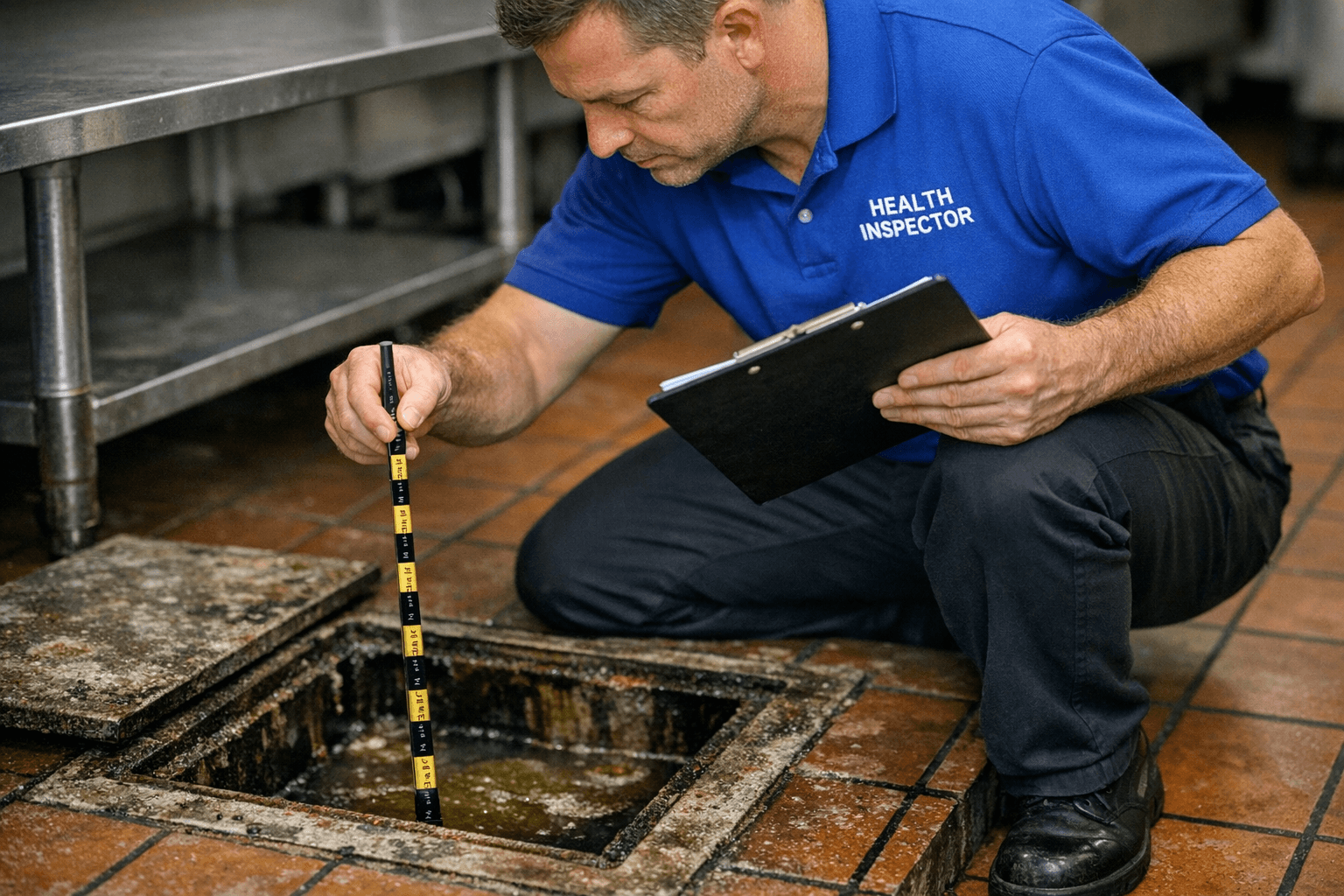
- Submit to periodic inspections from local environmental or sanitation authorities
Specific requirements vary meaningfully between jurisdictions. The City of Los Angeles has its own Pretreatment Program with specific interceptor sizing requirements. Orange County Sanitation District has detailed FOG control standards. San Diego's Metropolitan Wastewater Department enforces its own rules. If you operate in multiple cities or counties, you need to be aware that requirements may differ across locations.
CDFA Licensing: What It Means for Your Operation
The most important compliance step for any Southern California restaurant is verifying that your waste oil pickup provider holds a current, valid CDFA license.
How to verify a hauler's license:
The CDFA maintains a public database of licensed rendering companies and waste oil haulers. You can search by company name at the California Department of Food and Agriculture's official website. Ask any prospective provider for their license number before signing any service agreement and confirm it matches an active license in the database.
What a CDFA license covers:
A licensed rendering company is authorized to collect, transport, and process used cooking oil in California. The license requires the company to maintain insurance, comply with transportation regulations, and deliver collected oil to a licensed processing facility. This chain of custody is what protects you as a generator.
Red flags that suggest a hauler may not be licensed:
- Unable or unwilling to provide a CDFA license number
- No formal service agreement or documentation
- Cash-only transactions with no receipts
- No service ticket or manifest left after pickup
- Unsolicited offers to pick up your oil for free with no business information provided
Cooking oil theft — where unlicensed individuals steal restaurant oil to sell on the black market — is a significant problem throughout Southern California. An unlicensed "pickup" that turns out to be theft can still leave your restaurant without documentation of proper disposal, creating compliance exposure.
Manifest and Record-Keeping Requirements
California requires that used cooking oil shipments be accompanied by documentation that creates a traceable record from generator to receiving facility. For restaurant operators, this means your hauler must provide a service manifest or service ticket at the time of each pickup.
What a compliant service manifest should include:
- Date and time of pickup
- Generator information (your restaurant's name and address)
- Hauler information (company name and CDFA license number)
- Volume of material collected (in gallons or pounds)
- Destination facility information
- Driver signature
How long to keep records:
Most California environmental and health agencies recommend retaining waste disposal records for a minimum of three years. Some municipalities specify longer retention periods. When in doubt, keep records longer rather than shorter.
Digital vs. paper records:
Many waste oil pickup providers now offer digital service documentation — either emailed service tickets or a customer portal where pickup records are stored. Digital records are acceptable and in many ways preferable, since they're easier to organize, search, and produce during an inspection. Kitchen Oil Recycling provides digital service documentation for all pickups, eliminating the paper-chasing problem many restaurant operators deal with under manual systems.
FOG Program Compliance at the Local Level
Beyond state-level CDFA requirements, your restaurant's waste oil compliance is also shaped by your city or county's FOG control program. These programs target fats, oils, and grease as a primary cause of sewer blockages — a serious and costly infrastructure problem throughout Southern California.
Grease trap maintenance: FOG programs typically require commercial kitchens to maintain properly sized, properly functioning grease interceptors. Cleaning frequency requirements vary — typically every 60 to 90 days for active kitchens — but inspectors can also require more frequent service if your trap shows a high accumulation rate. Kitchen Oil Recycling's grease trap cleaning service covers the full Southern California region and provides the documentation you need for FOG program compliance.
Best management practices (BMPs): Many FOG programs require restaurants to implement specific BMPs including dry-wiping pots and pans before washing, using drain screens, posting employee training materials about grease disposal, and keeping records of employee training. These requirements are often included in the FOG control permit your restaurant receives from your local sanitation authority.
FOG control permits: Some jurisdictions issue formal FOG control permits to commercial food service establishments. These permits specify your grease interceptor requirements, cleaning frequency, record-keeping obligations, and inspection schedule. Operating without a required FOG permit, or allowing a permit to lapse, can trigger fines and required corrective actions.
Penalties for Non-Compliance
Waste oil disposal violations in Southern California can result in significant financial penalties. The specific amounts vary by violation type and jurisdiction, but here's a realistic picture of what non-compliance can cost:
- Improper disposal (pouring oil down drain or on ground): Municipal fines typically range from $500 to $10,000 per incident, with repeat violations drawing higher penalties
- Using an unlicensed hauler: CDFA and local environmental agencies can assess fines against the generator as well as the hauler
- Grease trap violations: Sewer system surcharges and mandatory repair orders, plus reinspection fees
- Failure to maintain records: Compliance notices, fines, and increased inspection frequency
Beyond direct fines, a significant oil spill or sewer overflow caused by FOG from your kitchen can result in cleanup cost liability — particularly if the overflow causes damage to neighboring properties or public infrastructure.
Building a Compliant Waste Oil Pickup Program
The practical steps to getting and staying compliant are straightforward:
- Verify your current hauler's CDFA license — if you can't confirm it, get it in writing before your next pickup
- Ensure you're receiving a manifest or service ticket for every pickup — no documentation means no proof of compliance
- Set up a records folder (physical or digital) specifically for waste oil and grease trap service documentation
- Understand your local FOG program requirements — your city or county's public works or sanitation department website is the starting point
- Stay current on grease trap cleaning — don't wait for an inspection to prompt action
- Adjust pickup frequency seasonally to ensure containers never overflow
Kitchen Oil Recycling's waste oil pickup and bulk disposal services operate throughout Orange County, Los Angeles, and San Diego with full CDFA licensing, manifest documentation on every pickup, and digital record-keeping built into the service. If your current setup has gaps — or if you've never been fully confident your oil disposal is compliant — it's worth a conversation before an inspector prompts it.