Industrial Bulk Oil Collection Built for Food Manufacturing Scale
CDFA-compliant bulk cooking oil collection for food processors, snack manufacturers, and production facilities across Southern California. Holding tank infrastructure, scheduled pump-outs for 1,000 to 5,000+ gallons per week, and quality-consistent oil that biodiesel buyers rely on. Free service, no contracts.
Industrial Bulk Oil Collection Built for Food Manufacturing Scale
CDFA-compliant bulk cooking oil collection for food processors, snack manufacturers, and production facilities across Southern California. Holding tank infrastructure, scheduled pump-outs for 1,000 to 5,000+ gallons per week, and quality-consistent oil that biodiesel buyers rely on. Free service, no contracts.
Quick Answer
Food processor bulk oil collection is a scheduled service that removes large volumes of used cooking oil from food manufacturing facilities. CDFA-licensed tanker trucks pump holding tanks on a fixed schedule, generate bulk manifests per CCR Title 3 Section 1180, and transport oil for biodiesel recycling. Facilities producing 1,000 to 5,000+ gallons per week across Vernon, Inland Empire, and greater Southern California receive free weekly or twice-weekly service.
Food Processors Produce Industrial Oil Volumes That Restaurant-Grade Haulers Cannot Handle
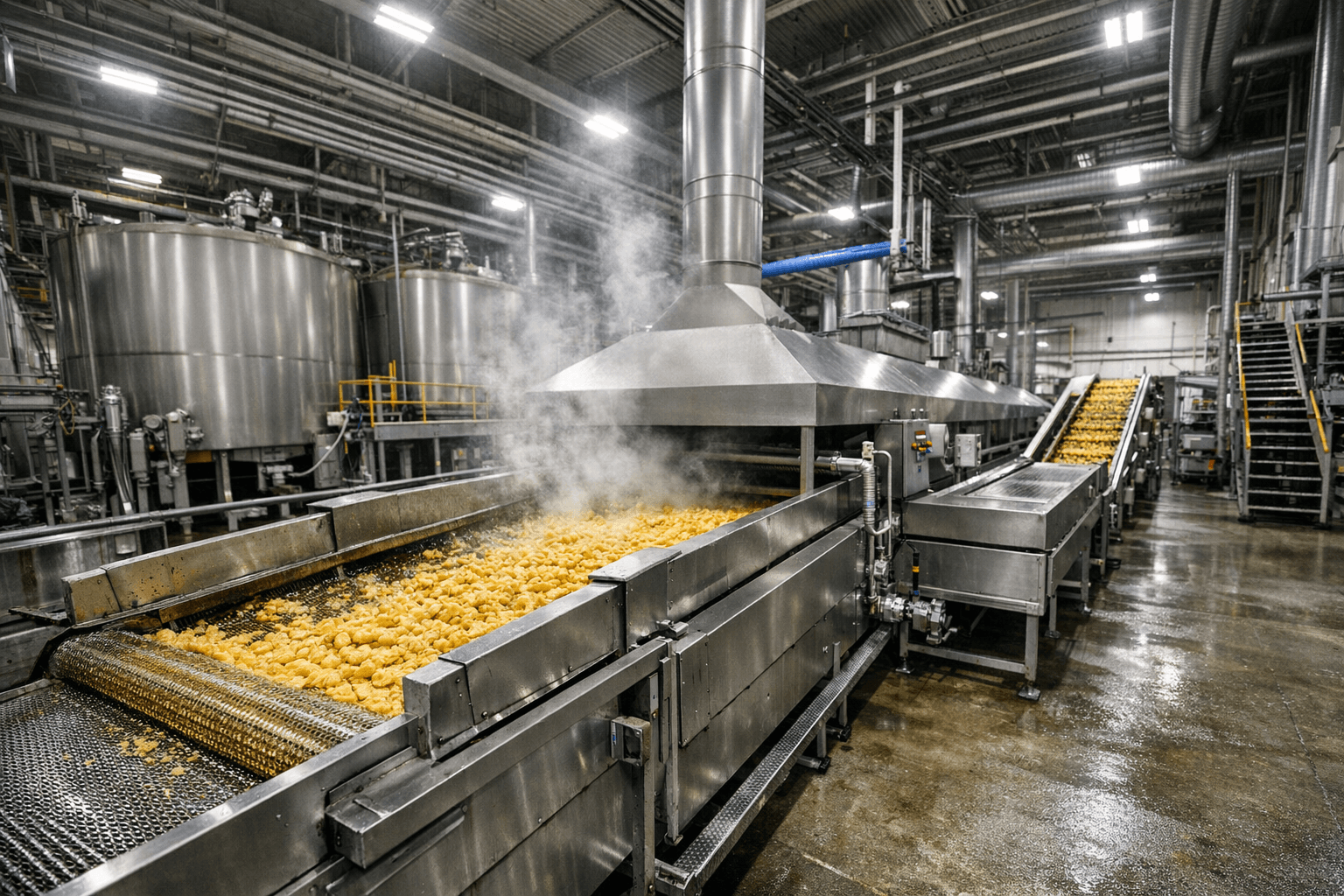
Food processing and manufacturing facilities operate at a fundamentally different scale than restaurants. A single continuous fryer line producing tortilla chips, frozen appetizers, or breaded proteins can generate 1,000 to 5,000 gallons of used cooking oil per week — more than most restaurants produce in a year. This volume requires holding tank infrastructure, tanker truck pump-outs, and bulk manifest documentation that standard grease pickup companies are not equipped to provide. The CDFA Inedible Kitchen Grease program under California Code of Regulations Title 3 Section 1180 requires compliant manifests for every collection, and at industrial volumes the documentation requirements expand to include batch tracking, quality sampling records, and transporter chain-of-custody documentation that biodiesel refineries require before accepting feedstock. A missed pump-out at a food processing facility does not mean an inconvenient overflow — it means production line shutdowns, because your fryers cannot cycle oil when the holding tank is at capacity.
The operational stakes for food processors extend far beyond waste management. Used cooking oil from food manufacturing facilities is a high-value commodity in the biodiesel supply chain, and maintaining oil quality through proper tank infrastructure and timely collection matters for efficient recycling. Facilities running continuous fryer lines with temperature-controlled oil management systems produce cleaner, lower-FFA (free fatty acid) oil that biodiesel refiners prefer. But oil quality degrades if it sits in an under-maintained holding tank for too long while you wait for an overbooked hauler to schedule a pump-out. Food processors in the Vernon industrial district, the Inland Empire manufacturing corridor, and throughout greater Los Angeles are dealing with service disruptions because their oil collection partner treats industrial accounts with the same scheduling rigidity as a 50-gallon restaurant pickup.
California regulatory compliance adds another dimension of complexity at manufacturing scale. In addition to CDFA IKG manifest requirements, food processors must comply with local industrial pretreatment programs that regulate fats, oils, and grease discharges to the sanitary sewer system. The LA County Sanitation Districts administer industrial waste permits for facilities in Vernon and surrounding areas, and the Santa Ana Regional Water Quality Control Board oversees discharges in Orange County and the Inland Empire. A grease containment failure at a food processing facility can trigger environmental enforcement actions with penalties starting at $10,000 per day under California Water Code Section 13350. Our service provides the tanker capacity, scheduling reliability, quality management, and regulatory documentation that food manufacturing operations require — built from the ground up for industrial volumes, not adapted from a restaurant service model.
85+
food manufacturing facilities served
2.4M
gallons collected annually
99.9%
scheduled pump-out completion rate
Tanker-Scale Pump-Outs Matched to Production Line Schedules
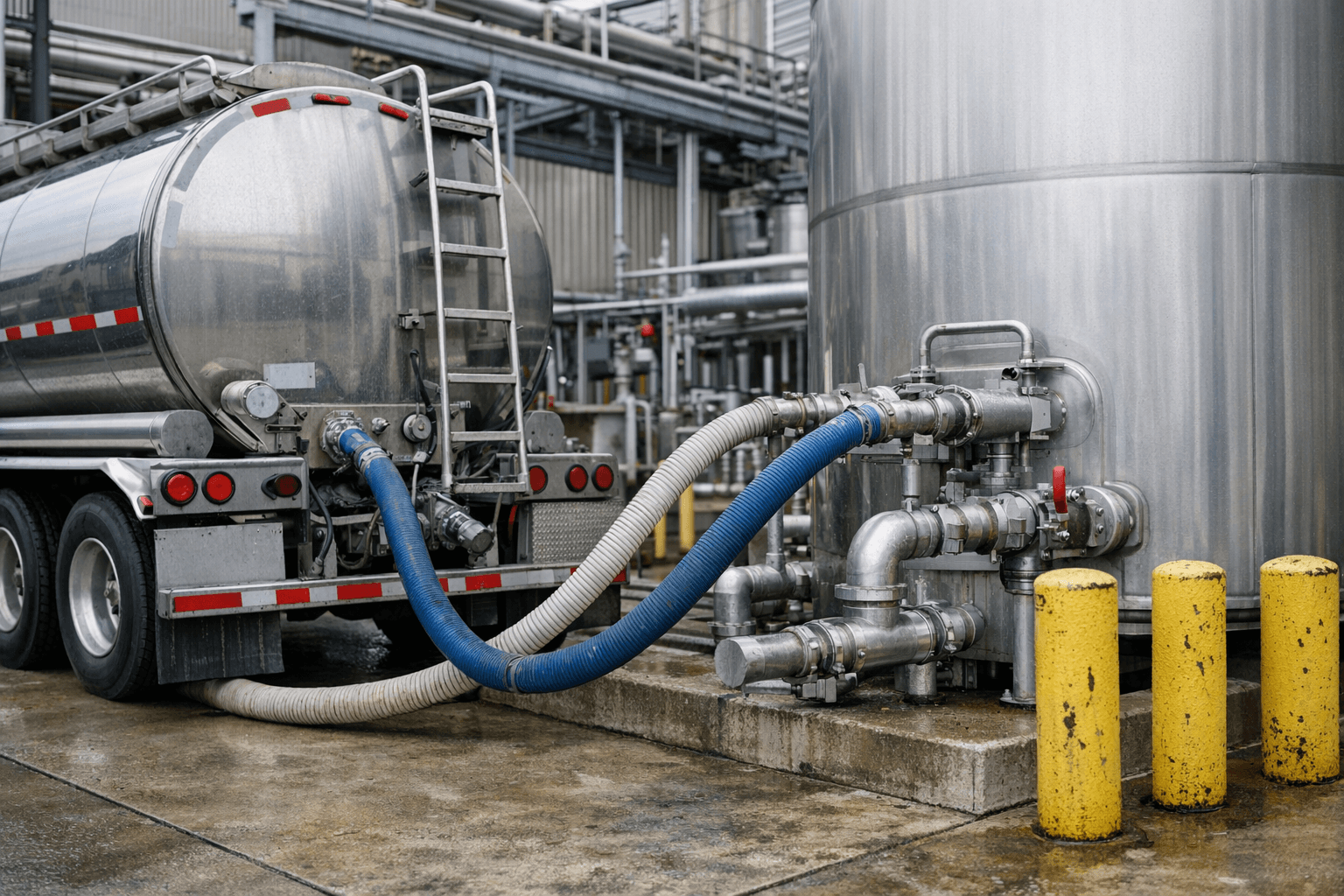
Food processing facilities cannot afford a missed pump-out. When your holding tank reaches capacity, your continuous fryer lines cannot cycle oil, and production stops. Our tanker trucks are scheduled around your production calendar — not the other way around. We assign fixed pump-out days timed to your holding tank fill rate, with capacity monitoring that triggers early collection if production volume spikes beyond the normal cadence. Facilities running double shifts or seasonal production surges receive automatic schedule adjustments. For Vernon industrial district facilities, we maintain dedicated tanker routing that ensures same-day service availability. For a comprehensive look at how bulk collection logistics work for high-volume producers, see our bulk cooking oil disposal page (/services/bulk-cooking-oil-disposal-recycling).
- Tanker trucks with 2,500 to 5,000 gallon capacity matched to your tank volume
- Fixed pump-out schedule timed to production line fill rates
- Automatic frequency adjustments for seasonal surges and double-shift production
- Dedicated Vernon and Inland Empire tanker routing for same-day availability
- Production line continuity guaranteed — no shutdowns from full holding tanks
Holding Tank Infrastructure and Quality Management
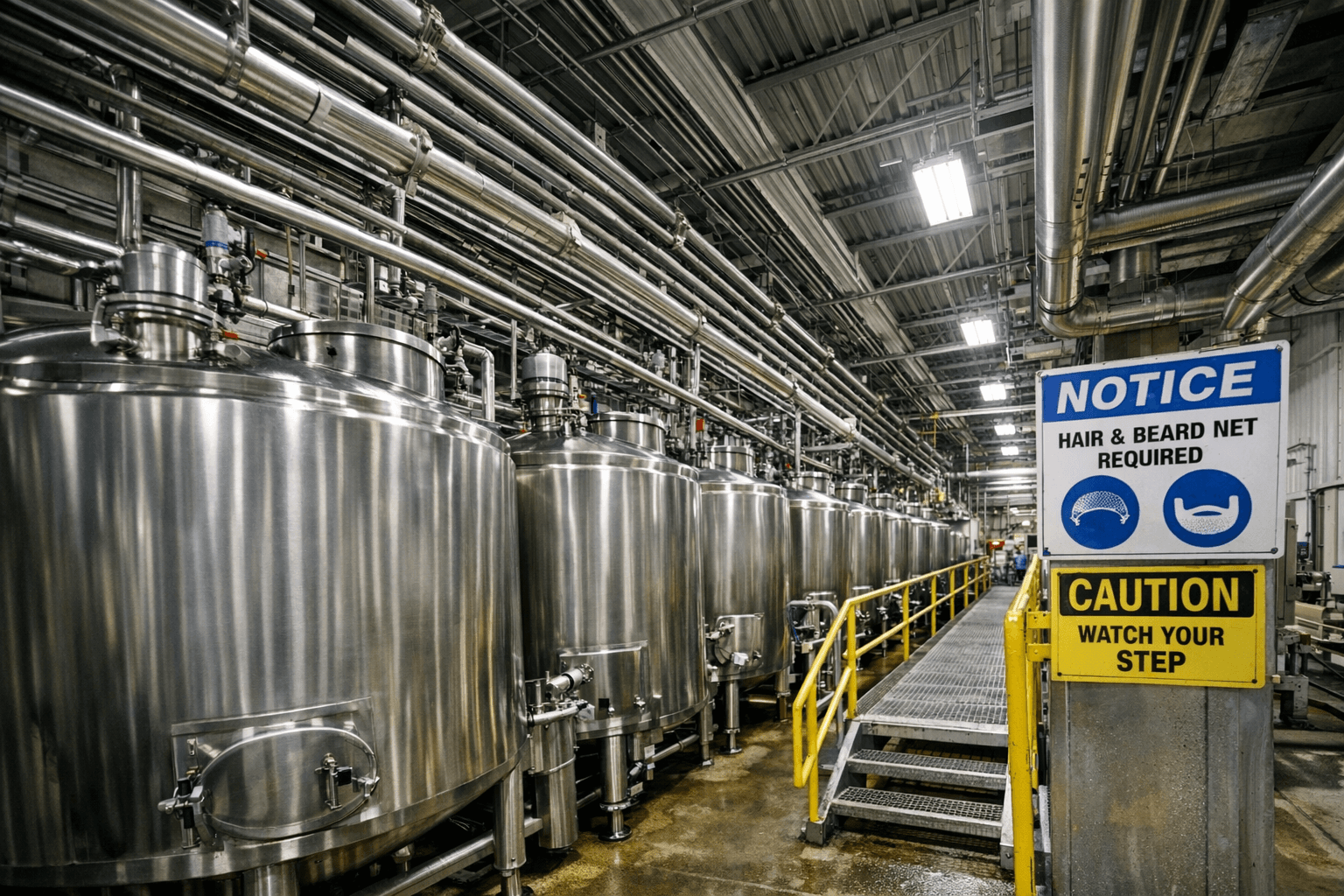
The condition of your holding tank infrastructure directly affects oil quality and recycling outcomes. We provide holding tanks from 500 to 5,000 gallons at no cost, engineered for food manufacturing environments with heated elements to maintain oil viscosity, sight gauges for level monitoring, and sealed systems that prevent contamination from water, debris, or ambient moisture. Our drivers inspect tank integrity on every visit, test oil quality with FFA sampling, and document condition reports in your dashboard. For more on how oil quality affects the biodiesel supply chain, read our yellow grease collection guide (/blog/yellow-grease-collection-food-processors-guide).
- Holding tanks from 500 to 5,000 gallons provided at no cost
- Heated elements maintain oil viscosity and prevent solidification
- Sight gauges and level monitoring for proactive capacity management
- Sealed systems prevent water contamination and FFA degradation
- FFA quality sampling on every pump-out to document oil quality
CDFA Bulk Manifest Compliance and Industrial Permit Documentation
Food processors face documentation requirements that go beyond standard restaurant manifests. The CDFA IKG program cdfa.ca.gov/ahfss/MPES/Rendering/ requires licensed transporters and compliant manifests per CCR Title 3 Section 1180 for every collection, but at industrial volumes you also need batch tracking, quality sampling records, and transporter chain-of-custody documentation that biodiesel refineries require before accepting feedstock. Local industrial pretreatment programs administered by the LA County Sanitation Districts and the Santa Ana Regional Water Quality Control Board add facility-specific permit requirements for FOG discharge management. Our service generates all documentation automatically — bulk manifests, batch quality reports, chain-of-custody records, and compliance summaries formatted for both CDFA and local industrial permit audits. For details on California manifest requirements at all scales, read our CDFA manifest guide (/blog/cdfa-manifest-requirements-restaurants-2026).
- CDFA-licensed tanker operators with credentials verified on every route
- Bulk manifests auto-generated per CCR Title 3 Section 1180 after every pump-out
- Batch tracking and FFA quality sampling records for biodiesel refinery acceptance
- Chain-of-custody documentation from tank to refinery for full traceability
- Compliance reports formatted for LA County Sanitation Districts and regional water board audits
Free Service for High-Volume Producers — No Fees, No Contracts
Food processing facilities produce the highest-quality, highest-volume used cooking oil in the recycling supply chain. Our food processor program provides completely free collection, holding tank infrastructure, and compliance documentation regardless of volume. Facilities maintaining low-FFA oil through proper tank management and timely collection help ensure efficient biodiesel recycling, and our quality reporting gives you full transparency into your oil output. Volume and quality data are tracked in your dashboard with detailed reporting. For context on how the yellow grease market works, see our guide on selling used cooking oil (/blog/yellow-grease-buyer-how-to-sell-used-cooking-oil).
- Completely free collection regardless of volume
- No setup fees, no monthly charges, no contracts
- Transparent volume and quality reporting in your dashboard
- Detailed FFA testing results documented on every pump-out
- Eliminate waste disposal as a cost center entirely
Food Manufacturing Operations We Serve Across Southern California
Snack Food Manufacturers
Tortilla chip, potato chip, and snack food producers running continuous fryer lines generating 2,000 to 5,000+ gallons of used cooking oil per week.
Protein Processors
Breaded protein, chicken nugget, and prepared meat facilities with high-volume frying operations and strict quality requirements for outbound oil.
Frozen Food & Appetizer Producers
Frozen appetizer, egg roll, and prepared food manufacturers with continuous production lines and holding tank infrastructure requiring scheduled pump-outs.
Bakery & Dough Operations
Industrial bakeries and dough processing facilities producing fried dough products, donuts, and churros at manufacturing scale with consistent weekly oil volume.
Oil Refining & Repackaging
Cooking oil refiners, repackagers, and distributors generating off-spec oil waste that requires CDFA-compliant collection and proper recycling documentation.
Co-Pack & Contract Manufacturers
Co-packing and contract manufacturing facilities producing fried products for multiple brand clients with separate batch tracking and quality documentation requirements.
Industrial Bulk Oil Service vs. Restaurant-Scale Haulers
Collection capacity
Holding tank infrastructure
Oil quality management
Production line protection
Cost
Industrial permit documentation
What's Included
Everything you need — nothing you don’t.
- Free holding tank infrastructure from 500 to 5,000 gallons with heated systems
- Scheduled tanker pump-outs timed to your production line fill rates
- CDFA-compliant bulk manifest generated automatically after every collection
- FFA quality sampling on every pump-out with quality tier documentation
- Online dashboard with volume tracking and quality reports
- Tank integrity inspection and maintenance on every visit
- Completely free service regardless of volume
- No contracts, no setup fees, no minimum volume commitments
- Dedicated account manager for production schedule coordination
How It Works
Three steps. Five minutes. Done.
Request a Quote
Fill out a 30-second form or call us. No credit card, no commitment.
We Show Up On Time
Our uniformed driver arrives in a branded truck within your scheduled window. Every time.
Stay Compliant Automatically
Get digital manifests, pickup confirmations, and compliance records — all in your dashboard.
Frequently Asked Questions
Food processors face multiple overlapping regulations. The CDFA Inedible Kitchen Grease program cdfa.ca.gov/ahfss/MPES/Rendering/ requires licensed transporters and compliant manifests per California Code of Regulations Title 3 Section 1180 for every collection, with additional bulk documentation requirements for volumes exceeding standard restaurant pickup thresholds. California Health and Safety Code Section 114201 leginfo.legislature.ca.gov/faces/codes_displaySection.xhtml?lawCode=HSC§ionNum=114201 applies to facility grease trap and interceptor requirements. Local industrial pretreatment programs add facility-specific permit requirements — the LA County Sanitation Districts administer industrial waste permits for facilities in Vernon and surrounding manufacturing areas, and the Santa Ana Regional Water Quality Control Board oversees discharge permits in Orange County and the Inland Empire. California Water Code Section 13350 authorizes penalties starting at $10,000 per day for unpermitted discharges of fats, oils, and grease to the sanitary sewer system.
Volume varies significantly by product type and production scale. A mid-size snack food manufacturer running one continuous fryer line typically produces 1,000 to 2,000 gallons per week. Large-scale facilities with multiple fryer lines producing tortilla chips, breaded proteins, or frozen appetizers can generate 3,000 to 5,000+ gallons per week. Seasonal production surges — such as increased snack food production before the Super Bowl or holiday entertaining season — can push volumes 30 to 50 percent above baseline. We assess your specific production lines during the initial consultation and size holding tank capacity and pump-out frequency to match your actual output. For a broader view of the yellow grease supply chain at industrial scale, see our yellow grease collection guide (/blog/yellow-grease-collection-food-processors-guide).
We provide holding tanks from 500 to 5,000 gallons at no cost, selected based on your production volume and pump-out frequency. A facility producing 1,000 gallons per week with weekly pump-outs typically receives a 1,500-gallon tank to provide buffer capacity. Facilities producing 3,000+ gallons per week may receive multiple tanks or a single large-capacity unit depending on physical space constraints. All tanks include heated elements to maintain oil viscosity, sight gauges for level monitoring, and sealed intake systems to prevent water and debris contamination. Tank placement is engineered for your facility layout with consideration for tanker truck access, production floor proximity, and spill containment requirements. For details on our equipment offerings at all scales, visit our equipment page (/services/equipment).
No. Our food processor bulk oil collection service is completely free regardless of volume. There are no setup fees, no monthly charges, no per-gallon fees, and no contracts. We provide holding tank infrastructure, scheduled tanker pump-outs, FFA quality sampling, CDFA-compliant manifests, and full compliance documentation at zero cost. Used cooking oil has commodity value as biodiesel feedstock, which is why we can offer this service at no charge. Your dashboard includes detailed volume tracking and quality reporting so you have full visibility into your oil output.
Contact your account coordinator or call our operations line and we will schedule an additional pump-out within 24 hours. For food processing facilities, production continuity is paramount — a full holding tank means fryer lines cannot cycle oil and production stops. Our tanker routing in the Vernon industrial district and Inland Empire manufacturing corridor maintains same-day availability specifically for surge capacity. There are no surcharges for additional pump-outs. After the surge, we review your production forecast and adjust the standing schedule to prevent future capacity conflicts. Common triggers include new product launches, seasonal production increases, and additional shift schedules. We also monitor your tank fill rate through level reporting and proactively propose schedule adjustments before you reach capacity.
Biodiesel refineries evaluate incoming used cooking oil primarily on free fatty acid (FFA) percentage, moisture content, and contamination levels. Oil with FFA below 5 percent is considered premium feedstock and commands the highest market price. FFA above 15 percent may require additional pre-treatment before refining, reducing its value. Food processors with continuous fryer lines and temperature-controlled oil management systems typically produce cleaner oil than restaurants, but quality degrades when oil sits in improperly maintained holding tanks — water contamination from unsealed tanks, extended storage at ambient temperatures, and infrequent pump-outs all increase FFA. Our heated, sealed holding tank infrastructure and consistent pump-out schedules are specifically designed to preserve oil quality from your fryer to the refinery. For context on the full biodiesel supply chain, read our waste vegetable oil pickup guide (/blog/waste-vegetable-oil-pickup-biodiesel-supply-chain).
What Our Clients Say
“We run three continuous fryer lines producing 3,500 gallons of used oil per week. Our previous hauler treated us like a big restaurant account and could not keep up with our fill rate — we had two production shutdowns in one month because the tank was full. Since switching, we have not missed a single pump-out in eighteen months, and the free service eliminated oil disposal as a line item on our P and L entirely.”

Richard Tran
Plant Operations Director, Pacific Snack Foods
Vernon
“Our Inland Empire facility went through an LA County Sanitation Districts audit and the inspector wanted to see two years of bulk manifests, quality sampling records, and chain-of-custody documentation. I pulled everything from the dashboard in ten minutes. The inspector said it was the most organized oil disposal documentation he had seen at a food processing facility. That audit used to give me nightmares.”

Angela Martinez
Environmental Compliance Manager, Golden Valley Foods
Ontario
“We co-pack fried appetizers for six different brand clients, and each one needs separate batch tracking for their quality systems. Our hauler generates individual batch documentation for each production run, and we can pull reports by client in the dashboard. That level of traceability used to require a full-time admin tracking paper manifests. Now it is automatic.”

Steve Park
VP of Manufacturing, SoCal Prepared Foods
Santa Fe Springs
Related Resources
Guides
Free Tools
- Grease Trap Calculator
Find your recommended pumping frequency
- Compliance Checker
Check if you meet California grease requirements
Related Solutions
Restaurant Grease Pickup
Scheduled grease collection for independent restaurants with CDFA-compliant documentation, free containers, and consistent fixed-day service across Southern California.
Learn moreAirport Restaurant Grease Pickup
Security-cleared cooking oil collection for airport terminal restaurants and airline catering flight kitchens at LAX, SNA, SAN, and LGB.
Learn moreFast Food & QSR Grease Pickup
High-frequency grease collection for fast food franchises and QSR chains with heavy fryer throughput and multi-unit account management.
Learn moreGet Industrial Bulk Oil Collection — Free Service, No Contracts
Tell us about your production volume and we will engineer a holding tank setup and pump-out schedule within 48 hours. Equipment delivery and installation are free.