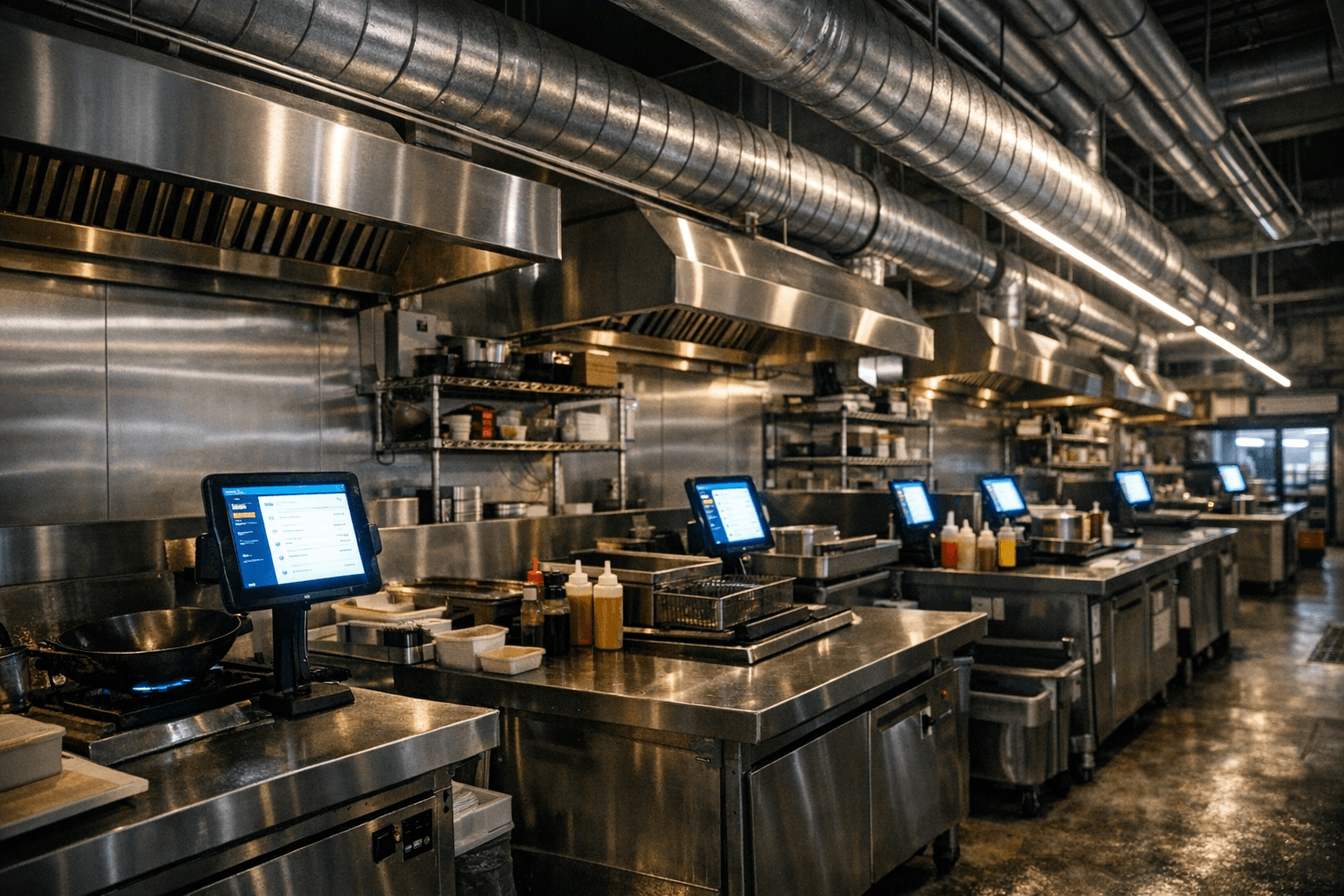
Grease Pickup Designed for Ghost Kitchen Operations
Free, scheduled cooking oil collection built for multi-tenant ghost kitchens, cloud kitchens, and shared commissary spaces across Southern California. We coordinate container access, generate per-tenant manifests, and keep your shared grease area compliant — so every brand under your roof stays inspection-ready without the finger-pointing.
Grease Pickup Designed for Ghost Kitchen Operations
Free, scheduled cooking oil collection built for multi-tenant ghost kitchens, cloud kitchens, and shared commissary spaces across Southern California. We coordinate container access, generate per-tenant manifests, and keep your shared grease area compliant — so every brand under your roof stays inspection-ready without the finger-pointing.
Quick Answer
Ghost kitchen grease pickup is a free, scheduled service that removes used cooking oil from multi-tenant cloud kitchens and shared commissary facilities. A CDFA-licensed driver arrives on a fixed schedule, services shared or per-tenant containers, generates digital manifests, and transports oil for biodiesel recycling. Service covers Orange County, Los Angeles, and San Diego.
Shared Kitchens Create Shared Grease Problems — But the Fines Hit One Operator
Ghost kitchens pack the fryer output of four or five restaurants into a footprint designed for one. Multiple tenants sharing a single grease container means nobody owns the problem — until the container overflows and the landlord gets a FOG violation notice from LA County or OC San. California Health and Safety Code Section 114201 requires every food facility to maintain functioning grease traps and interceptors, but ghost kitchen lease agreements rarely clarify who is responsible for shared grease infrastructure. The result is predictable: overflow, finger-pointing, and a citation that starts at $1,000 per offense leginfo.legislature.ca.gov. Operators who want to understand how these penalties escalate should review our breakdown at /blog/california-fog-violations-penalties-restaurants — the same enforcement framework applies to shared kitchen facilities. When your hauler no-shows at a ghost kitchen, every tenant in the building suffers the consequences.
The operational challenges compound the compliance risk. Ghost kitchens run high fryer density in tight spaces with no dedicated loading dock, which means your grease container is wedged between dumpsters, delivery staging areas, and HVAC equipment. Drivers from generic haulers often cannot locate the container, cannot access it with their pump truck, or simply skip the stop because the logistics are too complicated. Meanwhile, five virtual brands are frying chicken, wontons, fish tacos, and french fries simultaneously — generating oil volume that can fill a 300-gallon container in days, not weeks. If you are unsure whether your current grease trap maintenance meets the LA County 25-percent rule, our analysis at /blog/la-county-25-percent-grease-trap-rule explains exactly what inspectors measure and how shared kitchens are evaluated.
Ghost kitchen operators in Southern California also face a landlord compliance layer that traditional restaurants do not. Building owners and commissary management companies increasingly require tenants to provide proof of CDFA-compliant grease removal, maintain accessible manifests, and keep the shared grease area clean enough to pass fire department and health inspections at any time. A single tenant with sloppy grease habits can trigger a building-wide inspection that disrupts every operator in the facility. You need a grease pickup partner that understands multi-tenant logistics, coordinates with facility management, and generates documentation that protects both individual tenants and the building owner. Our /tools/compliance-checker can help you verify your current setup meets these requirements before your next inspection.
340+
ghost kitchen locations served
99.4%
on-time pickup rate
5:1
average tenant-to-container ratio managed
Multi-Tenant Container Management That Actually Works
Ghost kitchens do not operate like standalone restaurants, and your grease service should not pretend they do. We map your facility layout during onboarding, identify optimal container placement for shared access, and coordinate pickup schedules with your building management. Whether your facility runs three tenants on one container or assigns individual containers per kitchen unit, our drivers know the access protocols, key codes, and staging requirements before they arrive. No more missed pickups because the driver could not find the container behind a stack of delivery shelving.
- Facility-specific access protocols documented and followed on every visit
- Container placement optimized for shared access without blocking tenant operations
- Coordination with building management and commissary operators on schedule changes
- Per-tenant volume tracking when multiple brands share a single container
- Automatic frequency scaling as tenants join or leave your facility

CDFA-Compliant Documentation for Every Tenant in the Building
The CDFA Inedible Kitchen Grease program under CCR Title 3 Section 1180 requires licensed transporters and compliant manifests for every pickup — but ghost kitchens create a documentation challenge that most haulers ignore. When five tenants share one container, who gets the manifest? Our system generates facility-level and tenant-level documentation so both the building owner and individual operators have the records they need. This satisfies LA County FOG requirements cleanla.lacounty.gov/fog/, OC San FOG permits ocsan.gov, and building management audit requests simultaneously. For a deeper understanding of state-level requirements, see /blog/california-fog-violations-penalties-restaurants.
- CDFA-licensed drivers with credentials verified on every route
- Facility-level manifests for building owners and management companies
- Tenant-level compliance reports for individual kitchen operators
- Seven-year record retention accessible through separate dashboard logins
- Documentation formatted for LA County, OC San, and San Diego FOG programs
High-Density Fryer Operations Need Proactive Scheduling
A four-tenant ghost kitchen running fried chicken, fish and chips, tempura, and churros can generate 400 gallons of used cooking oil per week in a 2,000-square-foot space. That is restaurant-level output compressed into a fraction of the footprint, with none of the back-of-house infrastructure that a standalone restaurant relies on. We monitor your container fill rate and adjust pickup frequency proactively — not after an overflow. Seasonal menu changes, tenant turnover, and delivery platform promotions all affect oil volume, and our scheduling adapts in real time. If your facility also needs grease trap maintenance, /services/grease-trap-cleaning covers our full cleaning and documentation program.
- Proactive frequency adjustments based on actual container fill rates
- Handles volume spikes from delivery platform promotions and new tenant onboarding
- Emergency overflow response within four hours — 24/7 availability
- Container sizes from 100 to 500 gallons to match facility throughput
- Volume tracking dashboards help facility managers allocate grease costs across tenants
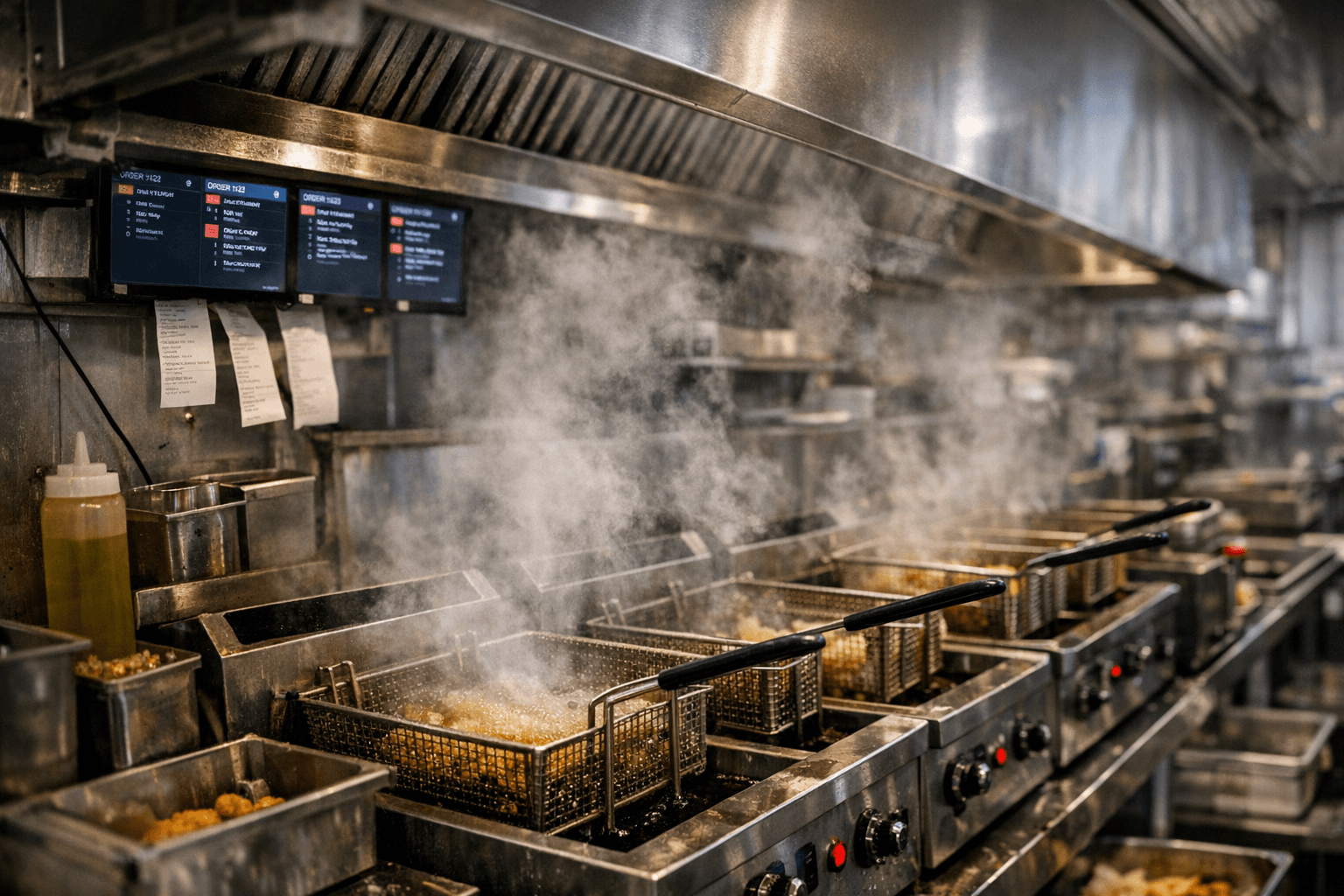
Free Equipment Sized for Shared Kitchen Spaces
Space is the most valuable commodity in a ghost kitchen, and your grease container should not waste any of it. We provide compact, high-capacity containers designed for the tight footprints and shared loading areas typical of cloud kitchen facilities. Locking lids prevent unauthorized dumping by non-tenants, and positioning is coordinated with your building layout so the container does not block fire exits, delivery staging, or tenant kitchen access. All equipment is provided, installed, maintained, and replaced at no cost.
- Compact container profiles designed for space-constrained ghost kitchen layouts
- Locking lids prevent unauthorized use by non-tenants or grease thieves
- Strategic placement coordinated with facility management and fire code requirements
- Free delivery, installation, maintenance, and replacement
- Containers meet CDFA IKG program requirements for secure UCO storage
Ghost Kitchen Operations We Serve Across Southern California
Multi-Tenant Ghost Kitchen Facilities
Cloud kitchen buildings with four to twenty tenant kitchens sharing common grease infrastructure, requiring coordinated container access and per-tenant compliance documentation.
Virtual Brand Operators
Multi-brand operators running several virtual restaurant concepts from a single kitchen unit, generating high fryer volume that demands reliable, frequent oil collection.
Shared Commissary Kitchens
Licensed commissary facilities serving food trucks, caterers, and delivery-only brands with rotating tenant schedules and variable oil production volumes.
Ghost Kitchen Landlords & Management Companies
Building owners and facility managers responsible for shared grease infrastructure compliance who need consolidated reporting and inspection-ready documentation.
Delivery-Only Restaurant Concepts
Single-tenant cloud kitchen operators running delivery-only brands from leased kitchen spaces with landlord-imposed grease compliance requirements.
Pop-Up & Incubator Kitchen Programs
Short-term kitchen rental programs and food business incubators with rotating tenants that create unpredictable oil volumes and need flexible pickup scheduling.
Ghost Kitchen Grease Service vs. Generic Haulers
Multi-tenant coordination
Cost to operator
CDFA compliance
Container access
Emergency response
Volume scaling
What's Included
Everything you need — nothing you don’t.
- Free collection container sized for your facility volume and tenant count
- Scheduled weekly or multi-weekly cooking oil pickup on a consistent fixed day
- CDFA-compliant digital manifests at both facility and individual tenant level
- Online dashboard with separate logins for building management and tenants
- Container cleaning, leak inspection, and pad cleanup on every visit
- Email and text confirmation to facility manager after each completed pickup
- 24/7 emergency overflow and spill response at no additional charge
- No contracts, no setup fees, no monthly charges, no hidden costs
- Dedicated account manager for shared-space coordination
How It Works
Three steps. Five minutes. Done.
Request a Quote
Fill out a 30-second form or call us. No credit card, no commitment.
We Show Up On Time
Our uniformed driver arrives in a branded truck within your scheduled window. Every time.
Stay Compliant Automatically
Get digital manifests, pickup confirmations, and compliance records — all in your dashboard.
Frequently Asked Questions
In California, every food facility operator is individually responsible for complying with grease disposal regulations under CA Health and Safety Code Section 114201 leginfo.legislature.ca.gov/faces/codes_displaySection.xhtml?lawCode=HSC§ionNum=114201. However, ghost kitchen lease agreements often assign shared infrastructure maintenance — including grease containers and interceptors — to the building owner or management company. In practice, both the facility operator and individual tenants can be cited if shared grease infrastructure is non-compliant. LA County FOG enforcement cleanla.lacounty.gov/fog/ and OC San permitting ocsan.gov/ocsan-permits/businessfog/ can issue violations to the permit holder, which is typically the building operator. Our service generates documentation for both levels — building management gets facility-wide compliance reports, and individual tenants get their own records for lease compliance and health inspections.
We install a container sized for the combined oil output of all tenants in the facility and adjust pickup frequency based on actual fill rates rather than estimates. Our driver arrives on a fixed schedule, pumps the shared container, cleans the area, and generates a facility-level manifest per CDFA IKG requirements cdfa.ca.gov/ahfss/MPES/Rendering/. For tenant-level tracking, our dashboard allocates volume proportionally based on fryer count and reported production, giving each tenant documentation they can provide to the building manager or a health inspector. If a tenant joins or leaves, we recalibrate the container size and frequency within one service cycle so you never overshoot or undershoot capacity.
The CDFA Inedible Kitchen Grease program cdfa.ca.gov/ahfss/MPES/Rendering/ requires that any company transporting used cooking oil hold a valid CDFA transporter license and produce a compliant manifest for every pickup per California Code of Regulations Title 3 Section 1180 law.cornell.edu/regulations/california/3-CCR-1180. Ghost kitchens are not exempt from these requirements — the facility where oil originates must be documented regardless of how many tenants operate inside. Our drivers carry CDFA credentials on every route, and manifests are generated digitally with the facility address, pickup date, volume collected, and destination recycling facility. Both the building operator and individual tenants can access these manifests through separate dashboard logins.
Yes. Ghost kitchen facilities are classified as food service establishments and must comply with local FOG programs. In LA County, the FOG program cleanla.lacounty.gov/fog/ requires food facilities to install properly sized grease interceptors, maintain cleaning logs, and retain disposal documentation. In Orange County, OC San ocsan.gov/ocsan-permits/businessfog/ administers a separate FOG permit with inspection requirements. The permit is typically held by the building operator, but lease agreements may pass compliance obligations to tenants. Ghost kitchens face additional scrutiny because high tenant density means higher grease loading on the sewer system, which can trigger more frequent inspections. Our compliance reports are formatted for both LA County and OC San inspectors.
We can have a container delivered and service scheduled within five business days of your initial request. During onboarding, we conduct a facility walk-through to map container placement, document access protocols and key codes, assess total fryer capacity across all tenants, and recommend container size and pickup frequency. For facilities with existing containers from another hauler, we coordinate the swap to avoid any gap in service. New tenant additions after initial setup are integrated within one service cycle — we adjust container size or frequency as needed and provision dashboard access for the new operator.
Call our 24/7 emergency line and a driver arrives within four hours on average. The driver pumps the container, cleans the overflow from the shared area, and files an incident report. There is no additional charge. After the emergency, we analyze the overflow cause — which is often a new tenant ramping up production, a promotional spike on delivery platforms, or a tenant dumping fryer oil more frequently than anticipated. We adjust container size or pickup frequency to prevent recurrence. The incident report is available to the building manager through the facility dashboard, providing documentation in case a specific tenant is responsible under their lease terms.
What Our Clients Say
“We have twelve tenants running everything from Korean fried chicken to fish tacos. Our old hauler treated us like one restaurant and could never keep up with the volume. Now we have a driver who knows our building, services the container twice a week, and gives each tenant their own compliance docs. My landlord stopped getting FOG notices the month we switched.”

Derek Yamamoto
Facility Manager, SoCal Cloud Kitchen Hub
Anaheim
“I run three delivery brands from one ghost kitchen unit — wings, samosas, and fried rice. My fryers run twelve hours a day and I fill a container faster than anyone else in the building. The service tracks my volume separately so I am not subsidizing tenants who barely fry. The manifests have saved me twice during health inspections.”

Priya Sharma
Virtual Brand Operator, Three Flames Kitchen
Long Beach
“We are a commissary kitchen that hosts food truck operators and pop-up brands. Tenants rotate monthly, which made grease scheduling a nightmare. The team adjusted our frequency three times in two months without us even asking — they just saw the volume changes in the data. Zero overflows since we started, and that is a first for this building.”

Marcus Webb
Owner, CloudBite Commissary
Costa Mesa
Related Resources
Guides
Free Tools
- Grease Trap Calculator
Find your recommended pumping frequency
- Compliance Checker
Check if you meet California grease requirements
Related Solutions
Food Truck Oil Collection
Flexible grease pickup for mobile food operations with variable locations, commissary kitchen routines, and event-based cooking schedules.
Learn moreRestaurant Grease Pickup
Free, scheduled cooking oil collection for independent restaurants with CDFA-compliant manifests and reliable weekly service across Southern California.
Learn moreFast Food Grease Pickup
High-frequency grease collection for fast food franchises and QSR chains with heavy fryer throughput and multi-unit account management.
Learn moreGet Free Ghost Kitchen Grease Pickup — No Contract Required
Tell us about your facility and tenant count and we will confirm your pickup schedule within 2 hours. Container delivery is free and typically happens within the week.