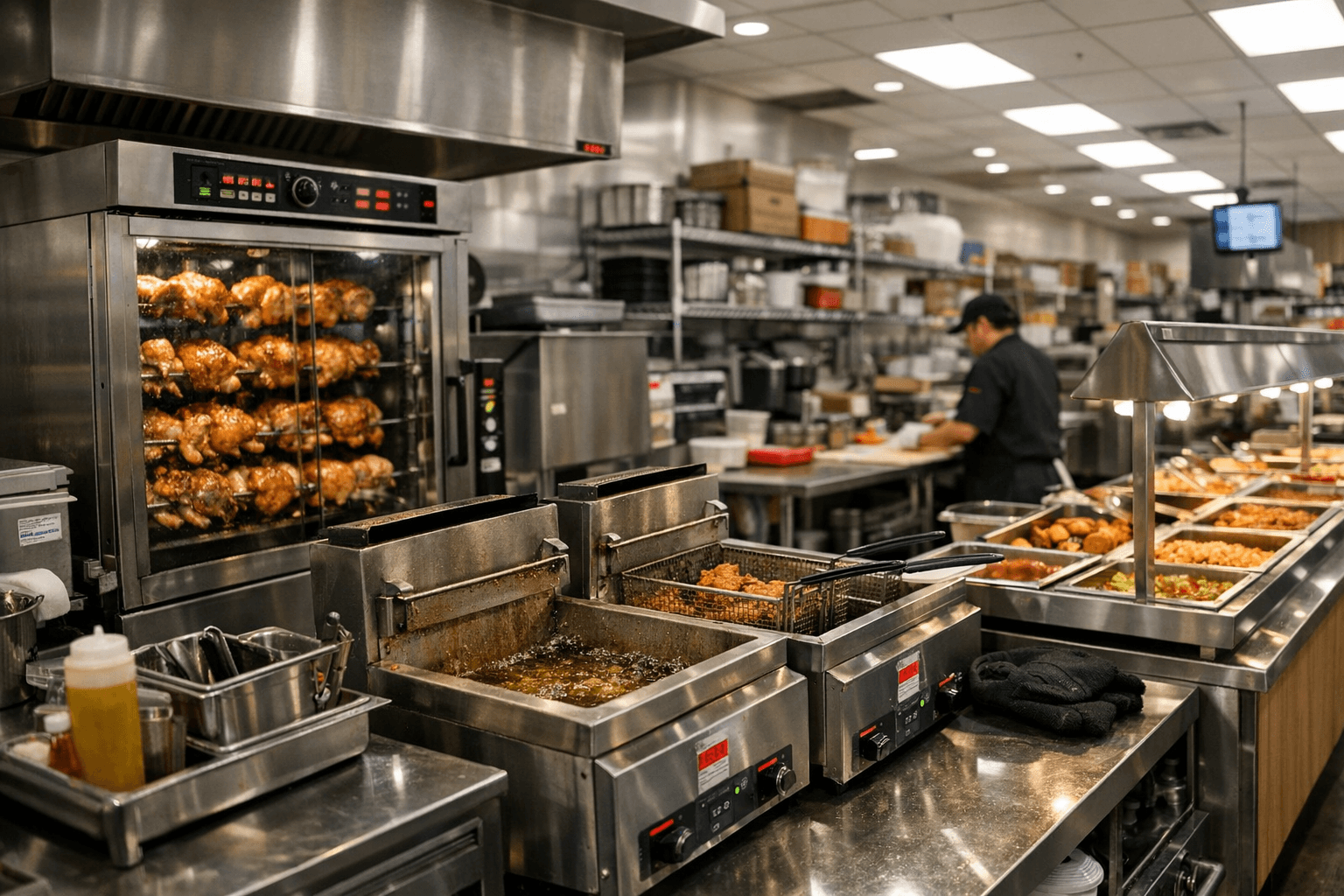
Grease Pickup for Grocery Delis and Hot Food Operations
Free, scheduled cooking oil collection designed for grocery store delis, hot food bars, rotisserie operations, and convenience store fryers across Southern California. Low-volume friendly service with the same CDFA compliance, reliability, and documentation that high-volume restaurants receive — because your deli fryer deserves the same attention.
Grease Pickup for Grocery Delis and Hot Food Operations
Free, scheduled cooking oil collection designed for grocery store delis, hot food bars, rotisserie operations, and convenience store fryers across Southern California. Low-volume friendly service with the same CDFA compliance, reliability, and documentation that high-volume restaurants receive — because your deli fryer deserves the same attention.
Quick Answer
Grocery store grease pickup is a free, scheduled service that collects used cooking oil from deli counters, hot food bars, rotisserie chicken operations, and convenience store fryers. A CDFA-licensed driver arrives on a fixed schedule, pumps out your collection container, generates a digital manifest, and transports oil for biodiesel recycling. Service covers grocery and convenience stores across Orange County, Los Angeles, and San Diego.
Grocery Delis Produce Less Oil Than Restaurants — But Face the Same Regulations
A grocery store deli counter with two fryers and a rotisserie oven produces 10 to 40 gallons of used cooking oil per week — a fraction of what a busy restaurant generates. But California does not scale its grease disposal regulations based on volume. The CDFA Inedible Kitchen Grease program under CCR Title 3 Section 1180 requires the same licensed transporters and compliant manifests whether your store produces 10 gallons or 200. California Health and Safety Code Section 114201 requires functioning grease traps in every food facility, including grocery store deli departments leginfo.legislature.ca.gov. County FOG programs in LA County and Orange County apply to any commercial operation generating fats, oils, and grease — and your deli counter qualifies. The problem is that most grease haulers treat low-volume accounts as unprofitable afterthoughts: they skip pickups, refuse to service stores below a minimum gallonage, or charge monthly fees that eliminate whatever margin your deli department is earning. For a comprehensive look at how FOG violations affect food service operations regardless of size, see /blog/california-fog-violations-penalties-restaurants.
The shared waste area creates operational conflicts that restaurants do not face. Your grease container sits next to cardboard balers, produce waste dumpsters, and dairy delivery staging — competing for space in a loading dock area that was never designed to accommodate food waste separation. Grocery store managers juggle dozens of vendor relationships, and grease disposal is rarely the highest priority until something goes wrong. An overflowing container leaks into the produce delivery path, a health inspector cites the deli for missing manifests, or the corporate environmental compliance team flags the store during an audit. These problems are entirely preventable with a reliable grease partner, but most haulers do not consider a 20-gallon-per-week grocery account worth the trip. The LA County 25-percent grease trap rule applies to grocery deli operations, and our guide at /blog/la-county-25-percent-grease-trap-rule explains what inspectors evaluate during routine deli department reviews.
Corporate chain grocery stores face an additional compliance layer. Regional and national chains maintain environmental compliance standards that apply across every location, and a single store with grease management problems can trigger a chain-wide audit. Convenience store chains like 7-Eleven that operate roller grills and small fryers have the same documentation requirements but even smaller oil volumes — making it nearly impossible to find a hauler willing to service them. Independent grocery stores, Asian supermarkets, and ethnic markets with extensive hot food bars produce more oil than a typical deli but less than a restaurant, putting them in a service gap that most haulers ignore. Use /tools/compliance-checker to verify whether your current deli grease setup meets California and county-level requirements.
680+
grocery and convenience stores served
99.3%
on-time pickup rate
10 gal
minimum weekly volume — no account too small
Low-Volume Service Without Low-Priority Treatment
Most grease haulers set minimum volume thresholds that exclude grocery delis and convenience stores entirely. We do not. Whether your deli produces 10 gallons per week or your hot food bar generates 80, you receive the same fixed-day scheduling, the same driver consistency, and the same CDFA-compliant documentation as a 300-gallon-per-week restaurant account. We built our routing to include grocery and convenience store stops efficiently alongside restaurant pickups, so serving your lower-volume account does not mean compromising on reliability. Your store matters, your compliance matters, and your deli staff should not be the ones figuring out what to do with a full oil container.
- No minimum volume requirements — stores producing 10 gallons per week qualify
- Fixed pickup day with the same driver on every visit
- Equal scheduling priority alongside higher-volume restaurant accounts
- Biweekly or monthly service options for very low-volume operations
- Automatic frequency adjustments if your deli menu or hot food program changes
Rotisserie and Hot Food Bar Grease Handled Right
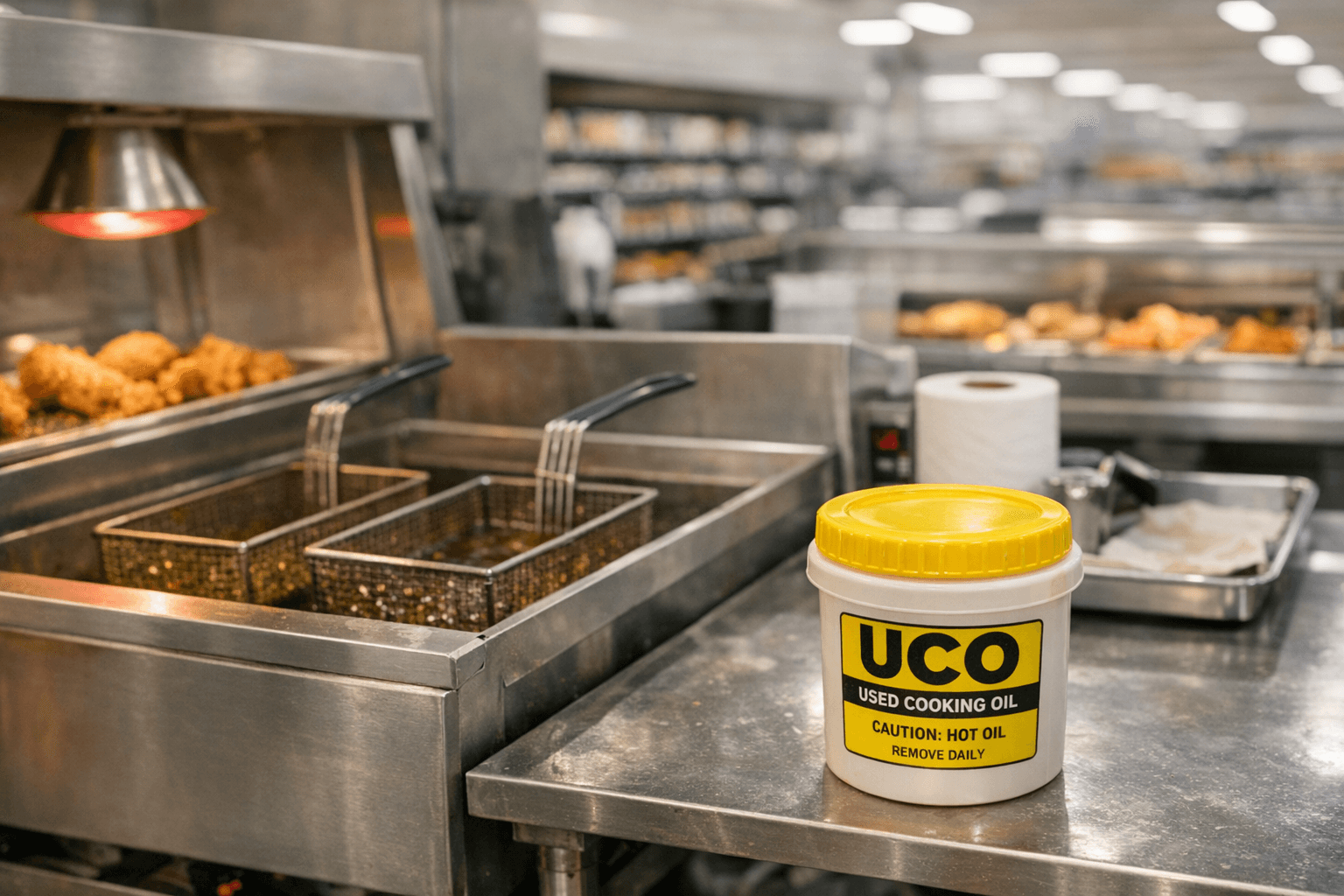
Rotisserie chicken operations produce a different type of grease than fryer oil — heavier, with higher solids content that can clog standard collection containers if not managed properly. Hot food bars with fried chicken, egg rolls, corn dogs, and other fried items generate a mix of fryer oil and rendered fat that requires appropriate container sizing and pickup frequency. We understand these production profiles because we service hundreds of grocery deli operations across Southern California. Your container is sized for your specific mix of fryer oil and rotisserie drippings, and our drivers know how to service mixed-grease containers without the residue buildup that causes odors and attracts pests between visits.
- Containers sized for the specific mix of fryer oil and rotisserie renderings your store produces
- Proper handling of high-solids rotisserie grease that clogs standard containers
- Hot food bar volume tracked separately from deli fryer output when needed
- Driver training on grocery-specific grease types and container maintenance
- Residue cleaning on every visit to prevent odor and pest issues in shared waste areas
Corporate Chain Compliance and Multi-Store Accounts
If your grocery chain operates 15 stores across Orange County and LA, you need one grease partner managing all of them — not 15 separate hauler relationships with inconsistent documentation. We provide multi-store account management with consolidated reporting, standardized service across every location, and a single point of contact for your regional operations or environmental compliance team. Each store receives individualized service based on its deli volume, but your corporate office sees one dashboard with chain-wide compliance status, volume trends, and audit-ready documentation for every location. For stores that also require grease trap cleaning, our /services/grease-trap-cleaning program integrates into the same multi-store account.
- Multi-store account management under one agreement and one point of contact
- Consolidated chain-wide dashboard with per-store drill-down capability
- Standardized service levels across all locations for corporate compliance audits
- Individual store scheduling based on actual deli volume and hot food program
- Corporate environmental team access to chain-wide compliance reports and diversion data
Full CDFA and FOG Compliance for Every Store
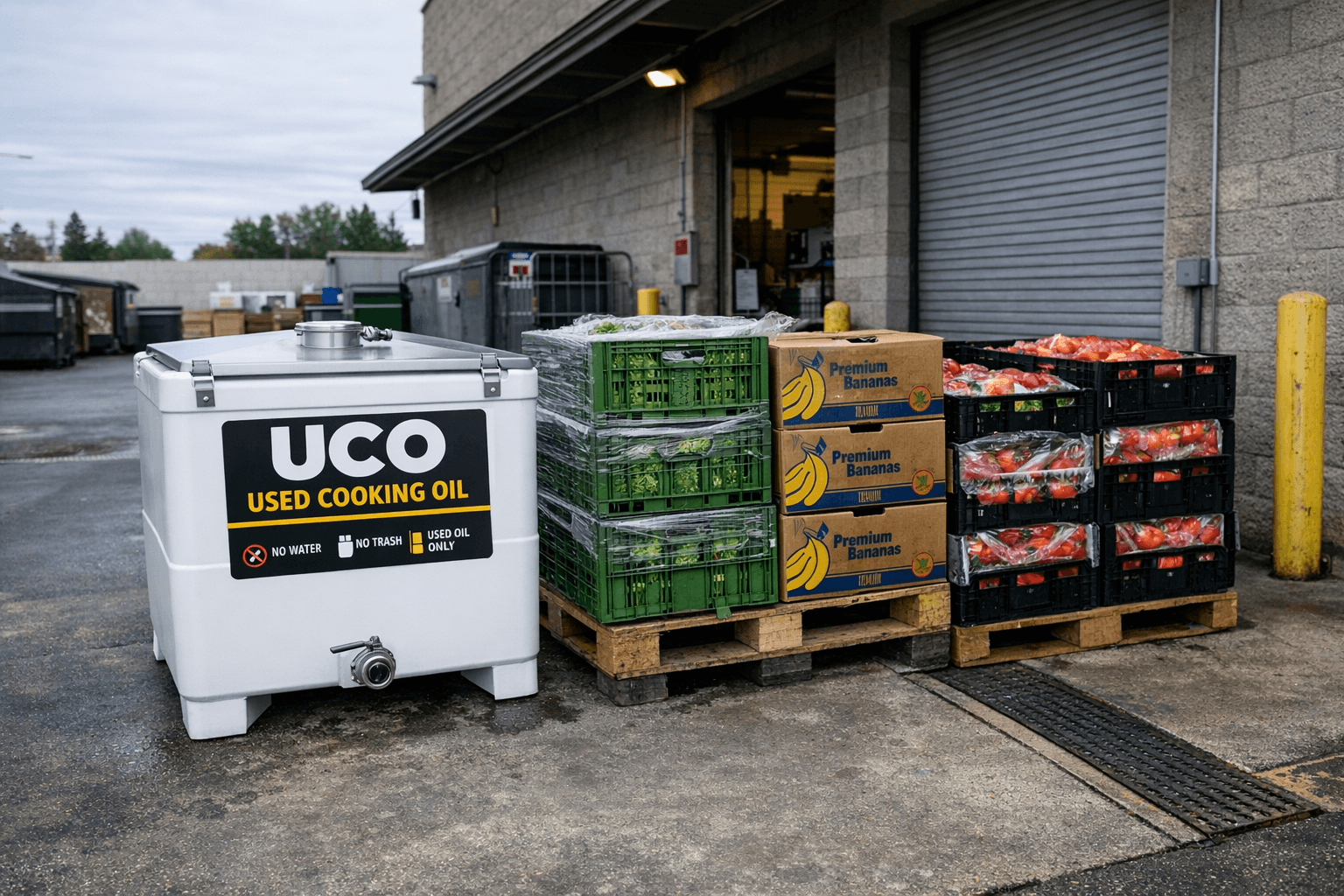
The CDFA IKG program does not differentiate between a restaurant producing 200 gallons per week and a grocery deli producing 15. Every pickup requires a licensed transporter and a compliant manifest under CCR Title 3 Section 1180. LA County FOG requirements cleanla.lacounty.gov/fog/ and OC San permits ocsan.gov apply to grocery stores with food preparation areas, and health inspectors check deli department grease management during routine store inspections. Our service automates all documentation so your deli manager never has to track manifests, and compliance reports are accessible through your dashboard for health inspectors, corporate auditors, or landlord inquiries.
- CDFA-licensed drivers with credentials verified on every route
- Digital manifests auto-generated per CCR Title 3 Section 1180 after every pickup
- Documentation satisfies LA County FOG, OC San FOG permit, and San Diego requirements
- Seven-year record retention accessible through your online dashboard
- One-click compliance reports for health inspectors, corporate audits, and landlord requests
Grocery and Convenience Operations We Serve
Full-Service Grocery Store Delis
Supermarket deli departments with fryers, rotisserie ovens, and hot food cases producing consistent weekly oil volume that requires reliable, documented collection.
Convenience Store Fryer Operations
Convenience stores and gas station food marts with roller grills, small fryers, and food warming equipment producing low but consistent oil volumes needing compliant disposal.
Asian Supermarket Hot Food Bars
Asian grocery markets with extensive hot food counters, wok stations, and deep fryers producing restaurant-level oil volumes from fried chicken, egg rolls, tempura, and dim sum items.
Regional & National Grocery Chains
Multi-store grocery operations requiring standardized grease service across all locations with consolidated reporting for corporate environmental compliance teams.
Independent Neighborhood Markets
Family-owned grocery stores and ethnic markets with deli counters and hot food programs that produce smaller oil volumes but still need CDFA-compliant documentation.
Prepared Foods & Meal Kit Operations
Grocery stores with in-house prepared food kitchens producing fried items, roasted meats, and pre-made meals that generate cooking oil requiring regular collection.
Grocery-Ready Grease Service vs. Restaurant-Only Haulers
Minimum volume
Cost to store
Rotisserie grease
Multi-store management
CDFA compliance
Scheduling priority
What's Included
Everything you need — nothing you don’t.
- Free collection container sized for your deli and hot food production volume
- Scheduled weekly, biweekly, or monthly pickup on a consistent fixed day
- CDFA-compliant digital manifest generated automatically after every pickup
- Online dashboard with pickup history, compliance reports, and volume tracking
- Container cleaning and waste area inspection on every visit
- Email and text confirmation after each completed pickup
- 24/7 emergency overflow and spill response at no additional charge
- No contracts, no setup fees, no monthly charges, no minimum volume requirements
- Dedicated account manager for multi-department coordination
How It Works
Three steps. Five minutes. Done.
Request a Quote
Fill out a 30-second form or call us. No credit card, no commitment.
We Show Up On Time
Our uniformed driver arrives in a branded truck within your scheduled window. Every time.
Stay Compliant Automatically
Get digital manifests, pickup confirmations, and compliance records — all in your dashboard.
Frequently Asked Questions
Yes. Any commercial food preparation operation in California — including grocery store deli counters, hot food bars, rotisserie operations, and convenience store fryers — must comply with the same grease disposal regulations as restaurants. The CDFA Inedible Kitchen Grease program cdfa.ca.gov/ahfss/MPES/Rendering/ requires licensed transporters and compliant manifests per CCR Title 3 Section 1180 regardless of volume. California Health and Safety Code Section 114201 leginfo.legislature.ca.gov/faces/codes_displaySection.xhtml?lawCode=HSC§ionNum=114201 requires functioning grease traps in all food facilities. LA County FOG cleanla.lacounty.gov/fog/ and OC San FOG permits ocsan.gov/ocsan-permits/businessfog/ apply to grocery stores with food preparation areas. The regulations do not have a volume exemption — even a single deli fryer triggers compliance obligations.
No. We service grocery stores producing as little as 10 gallons of used cooking oil per week. Many grocery delis with one or two fryers and a rotisserie oven fall in the 10-to-30-gallon range, and convenience stores with roller grills or small fryers may produce even less. We offer biweekly or monthly pickup schedules for very low-volume operations so the container is not sitting idle for weeks at a time. The service is completely free regardless of volume — no minimum gallonage requirements, no monthly fees, and no surcharges for small accounts.
Rotisserie chicken grease has a higher solids content and different viscosity profile than standard fryer oil. It solidifies faster at lower temperatures and can clog standard collection containers if not managed properly. We provide containers designed for mixed-grease operations — with wider openings and materials that prevent buildup — and our drivers are trained to service grocery-specific containers that accumulate both liquid fryer oil and semi-solid rotisserie renderings. The container is cleaned on every visit to prevent residue accumulation that causes odors and attracts pests in the shared waste area behind your store.
Yes. We provide multi-store account management for grocery chains of any size. Each store receives individualized service — container sizing based on its specific deli volume, pickup frequency matched to its production, and per-store compliance documentation. Your regional operations or environmental compliance team accesses a consolidated dashboard showing chain-wide status, volume trends, compliance alerts, and audit-ready reports for every location. A single account manager coordinates all scheduling, communications, and service changes across your entire store network. Adding new stores or closing locations is handled through one contact with no disruption to existing service.
Health department inspectors in Southern California evaluate grease management as part of routine grocery store inspections. They check that deli department grease traps are functioning per CA Health and Safety Code Section 114201, that used cooking oil is stored in a secure container away from food preparation and storage areas, and that disposal documentation is available on request. In LA County, inspectors also verify FOG program compliance including interceptor maintenance logs. Our service prevents deli department citations by maintaining consistent pickup schedules, generating digital manifests accessible through your dashboard at any time, and cleaning the container area on every visit. Your deli manager can pull compliance reports in seconds when an inspector requests documentation.
Yes. The CDFA IKG program cdfa.ca.gov/ahfss/MPES/Rendering/ applies to any establishment generating inedible kitchen grease, regardless of volume or business type. A convenience store operating a single fryer for corn dogs and chicken tenders is subject to the same licensed-transporter and manifest requirements as a full-service restaurant. Many convenience store operators are unaware of this requirement because their grease volume is small, but the regulation has no minimum threshold. We service convenience stores across Southern California with the same documentation and compliance standards we provide to high-volume restaurants. Monthly pickup schedules work well for most convenience store fryer operations.
What Our Clients Say
“Our hot food bar produces more oil than most people expect — fried chicken, egg rolls, fried tofu, and tempura shrimp all day. We tried three haulers and none of them would service us consistently because we are not technically a restaurant. This team treats our account the same as any restaurant. Same driver every week, container always clean, and I have manifests ready whenever the health department shows up.”

Henry Tran
Store Manager, Pacific Asian Market
Westminster
“Managing grease compliance across 22 stores with different deli volumes was a nightmare. Some stores needed weekly pickup, others biweekly, and we had three different haulers with no centralized reporting. Now every store is on one account, I see compliance status for all locations on one dashboard, and our corporate environmental audit went from a two-week scramble to a one-click report export.”

Karen Mitchell
Regional Operations Manager, SoCal Grocery Chain
Orange County
“I have one small fryer for samosas and corn dogs. Every hauler I called said my volume was too small to bother with. I finally found a service that would take my 8 gallons a month seriously. The driver comes on the 1st and 15th, the container fits perfectly next to my dumpster, and I have real CDFA documentation instead of hoping nobody asks about my grease disposal.”

Raj Patel
Owner, Quick Stop Convenience
San Diego
Related Resources
Guides
Free Tools
- Grease Trap Calculator
Find your recommended pumping frequency
- Compliance Checker
Check if you meet California grease requirements
Related Solutions
Restaurant Grease Pickup
Free, scheduled cooking oil collection for independent restaurants with CDFA-compliant manifests and reliable weekly service across Southern California.
Learn moreFast Food Grease Pickup
High-frequency grease collection for fast food franchises and QSR chains with heavy fryer throughput and multi-unit account management.
Learn moreGhost Kitchen Grease Pickup
Multi-tenant grease collection for cloud kitchens and shared commissary spaces with per-tenant documentation and facility-level compliance management.
Learn moreGet Free Grocery Store Grease Pickup — No Volume Minimum
Tell us about your deli and hot food operations and we will confirm your pickup schedule within 2 hours. Container delivery is free — even for low-volume stores.